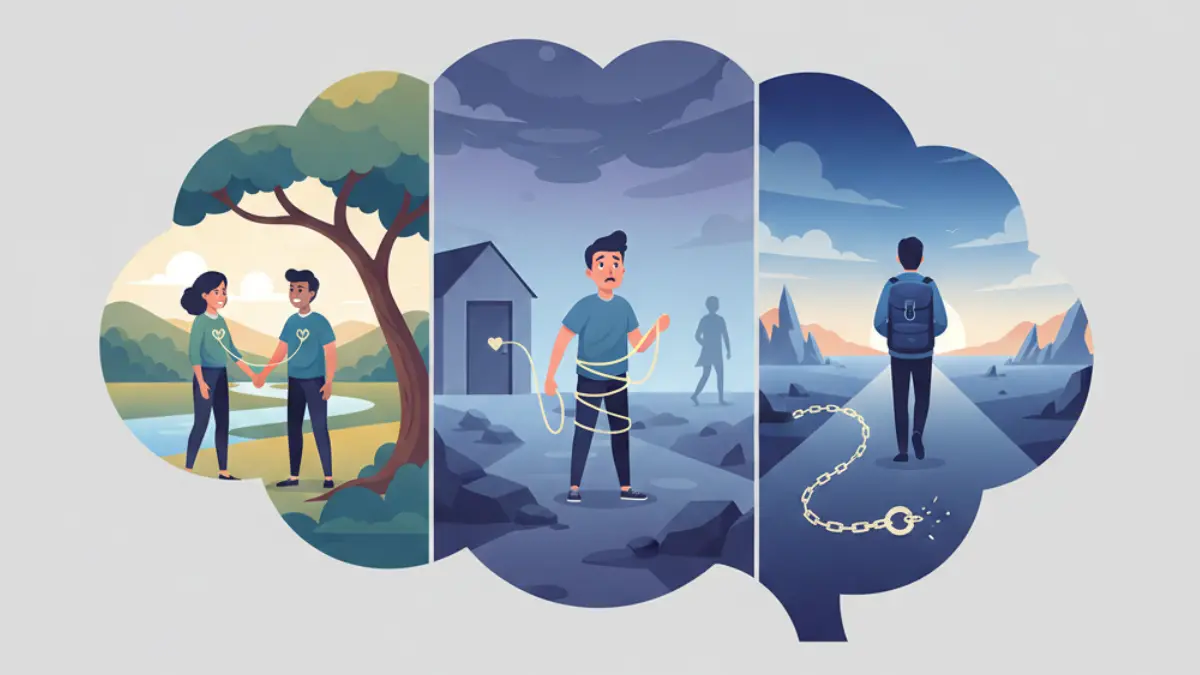
Do You Guard Your Heart or Wear It Openly? Discover Your Emotional Armor
We all develop ways to guard our most vulnerable parts. Discover the pattern your mind relies on.
We all develop ways to guard our most vulnerable parts. Discover the pattern your mind relies on.
Your brain has a limit for social interaction. This quick assessment helps you understand yours.
When couples prioritize authentic rituals over cultural pressure, connection often feels more genuine and fulfilling.
Everyone brings something valuable to love. Find out the trait that makes you a secure, supportive, and standout partner.
Research shows why calm, consistent partners may feel less stimulating and why that's actually healthy for relationships.
Assess your sense of belonging and emotional integration.
Start The Assessment →Are you overly preoccupied with your partner's love? Take this test to find out.
Start The Assessment →Is your relationship simply satisfying, or truly thriving?
Start The Assessment →Uncover your comfort level with intimacy and closeness in your romantic life by taking this short quiz.
Start The Assessment →A science-inspired quiz that reveals how responsive others are to your emotional needs.
Start The Assessment →Is it love at first sight, or a pattern of rapid attachment?
Start The Assessment →When arguments become the main pathway to intimacy, deeper emotional needs may be shaping your relationship patterns.
The request for space isn't always about distance. It often reflects emotional, cognitive, and relational needs that strengthen connection.
Cultural scripts around romance can distort how couples experience and evaluate their connection.
Friendships should feel mutual. When they become one-sided obligations, they can slowly erode connection and joy.
Focusing on a partner's potential instead of reality can keep relationships in a state of perpetual 'almost.' Learn how this paradox works.
When love becomes a performance on a schedule, connection can feel forced. Skipping certain rituals may help you celebrate more authentically.
Intimacy should feel safe, not scrutinized. Learn how to rebalance openness and privacy without sacrificing connection.
When you learn to accept care instead of chasing it, relationships start to feel more secure and affirming.
Some habits that irritate us in relationships aren't signs of carelessness, they're often expressions of attachment and long-term bonding.
When a relationship feels draining for no clear reason, it's often signaling unmet needs, emotional misalignment, or unresolved stress beneath the surface.
When discomfort is absent but safety is incomplete, relationships can feel stable without being truly secure.
This psychology-based insight reframes everyday annoyances as signals of emotional investment.
When driven by anxiety, constant explaining can slowly erode trust and emotional safety.
Understanding your relationship dynamics is powerful, but without action, awareness can quietly reinforce the very patterns you want to change.
When stress spikes, your nervous system may default to shutdown. Learn which habits reinforce this response, and how to remain emotionally available instead.
Couples can divide tasks perfectly and still feel disconnected. Learn the small adjustments that restore a shared sense of 'us.'
It's often not the conflict itself, but the habits surrounding it, that slowly block emotional safety and connection in relationships.
Love may bring people together, but one often-overlooked skill determines whether a relationship can endure conflict, change, and stress.
If your reactions aren't helping the resolution, they may be quietly fueling tension. Learn how to respond in ways that lower emotional defenses.
Learn which reactions often mishandle vulnerability and why they can make others shut down.
The holiday glow fades, leaving a quiet emotional lull. Learn why January feels aloof and how to embrace this natural shift instead of resisting it.
The key isn't winning arguments, it's truly understanding your partner's perspective. Learn why this works and how to practice it daily.
The realities relationships demand are often less comforting than we expect.
While physical touch supports relationship well-being, new findings suggest that feeling emotionally aligned may matter more than having identical needs.
Not all romance looks cinematic. Some of the most stabilizing expressions of love are subtle, practical, and deeply meaningful.
Emotional insight, calm communication, and self-control aren't always signs of secure connection; they can be defenses against vulnerability.
Is choosing a partner 'on paper' really a mistake? Psychology shows it's an emotionally intelligent approach that builds lasting connection.
Attachment science explains how the anxious–avoidant push-pull creates magnetic, lasting bonds.
Discover how shifting focus from misplaced responsibility to intentional habits can save your New Year's goals.
Feeling alone with your partner is often a signal your emotional needs aren't being met. How you respond to that signal is where change begins.
Research shows long-term relationship success depends less on chemistry and more on these foundational emotional abilities.
These small, repeatable practices help couples recover from stress, missteps, and everyday strain.
As partners evolve, relationships must evolve too. These discussions strengthen trust, clarity, and connection.
Research shows that fear, attachment patterns, and self-doubt often override alignment, making it hard to walk away.
Look closely at couples who've stood the test of time, and you'll see these quiet markers of trust and commitment at work.
It's not the big gestures but the everyday 'non-events' that create stability, affection, and long-term closeness.
Lasting security comes from simple micro-behaviors that strengthen trust, connection, and communication.
These relationship traits determine whether you drift apart or grow closer over time.
When tension rises, these four habits can stop the spiral and bring you back to connection.
You're not failing at love. You're just fighting the kind of problems no couple can ever fully resolve.
You're not failing at love. You're just fighting the kind of problems no couple can ever fully resolve.
These nine truths separate couples who simply stay together from couples who actually thrive together.
When your love languages don't align, connection suffers. These two techniques make your relationship feel understood again.
You may think you've 'moved on,' but unspoken frustrations have a way of resurfacing in the moments you least expect.
Looking for more? Search our full archive for additional articles on the topic of relationships.