4 Valentine's Day Traditions That Undermine Real Connection
When love becomes a performance on a schedule, connection can feel forced. Skipping certain rituals may help you celebrate more authentically.

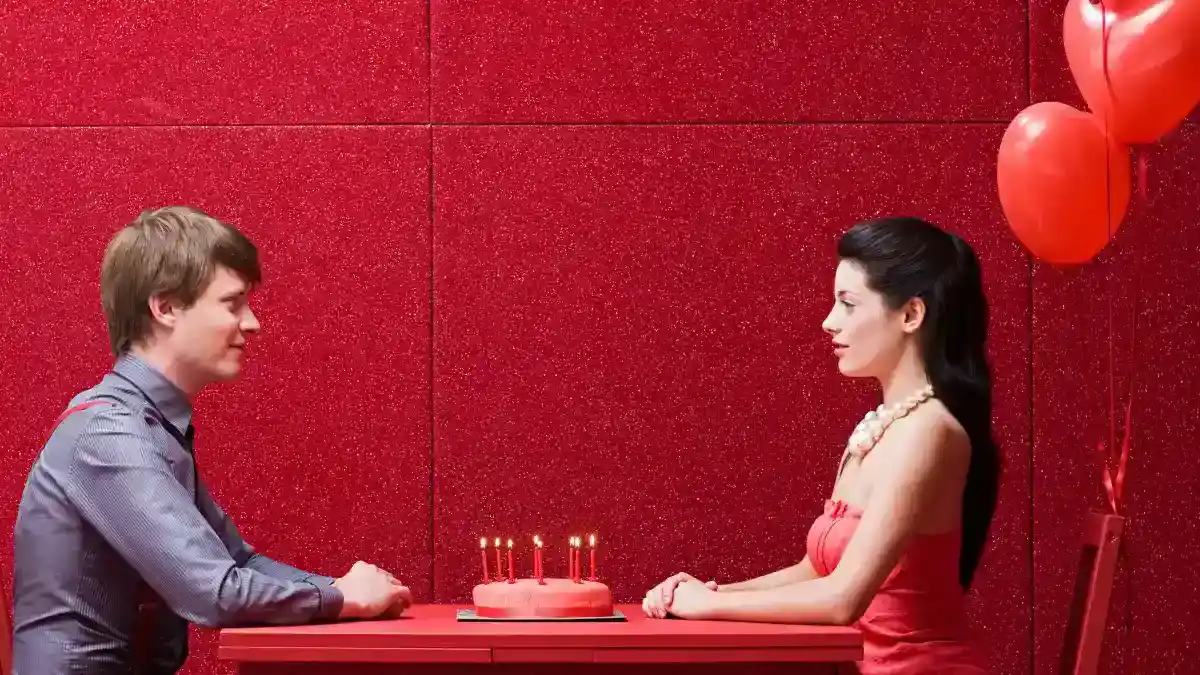
Valentine's Day is marketed as the holiday of connection and love, but most of us know how it can often have the opposite effect on the actual day. There's usually too much pressure when February 14th actually arrives; one might even feel a faint sense of performing intimacy rather than inhabiting it.
This might explain why human closeness rarely deepens through spectacle. Grand gestures often lack the depth of small moments of intimacy, wherein two nervous systems can feel seen, safe and responsive to one another. Unfortunately, many Valentine's Day rituals pull couples away from this very attunement and toward comparison, evaluation and emotional labor.
(Take this fun, science-informed Soulmate Test to explore if you and your partner connect on a day-to-day basis.)
So, this year, instead of asking, "What should we do?" perhaps try a different question, something like, "What should we skip?" Here are four surprisingly common Valentine's Day habits that, even when they are well-intended, tend to undermine closeness.
1. Skip The 'Big Valentine's Gesture' As A Substitute For Presence
Overtures of love are often only meant for social media. They might also feel satisfying to the part of the brain that equates effort with love. But psychologically, they are often a poor proxy for what actually creates connection.
What's more powerful as a predictor of closeness is perceived partner responsiveness, or the feeling that your partner notices you, understands you and responds in ways that corresponds your inner experience. You can receive a dozen roses and still feel lonely if your partner isn't actually tuned in to what you're feeling.
In a series of real-life, day-to-day studies, researchers found that when people feel emotionally met by their partner, they naturally become more physically affectionate, more likely to reach for, hug or touch their partner in gentle ways.
Importantly, the process runs in both directions, implying that affectionate touch also increases the partner's sense of being emotionally understood the next day. Intimacy, then, grows through a feedback loop of emotional responsiveness and physical closeness, not through the occasional grand spectacle.
Making a spectacle of love might even disrupt this feedback loop by turning love into a performative experience. Suddenly, you might feel that Valentine's evening has to be " extra special," and your partner's reaction must be "grateful." Both people become slightly less present, because they are monitoring whether the moment is landing correctly rather than actually being with each other.
This year, if you want to feel closer, skip the emotional staging and invest in attention. Sit next to each other, ask each other real questions and choose to stay even if the answer isn't what you expected it to be. This is the state that invites the kind of spontaneous, connecting touch that makes people feel loved in their bodies and not just in theory.
Closeness is not built by being impressed. It's built far more reliably by being emotionally accompanied every single day.
2. Skip Using Valentine's Day As A Relationship Report Card
One nonchalant way Valentine's Day creates distance is by turning the relationship into something to be evaluated. Questions like, "Did they plan enough?" or "Did I feel chosen enough?" or even "Was it romantic enough?" pulls the mind into a monitoring mode wherein you stop participating in the relationship and start auditing it. Instead of being inside the experience, you are scanning it for evidence of security or threat.
In dyadic studies of romantic couples, partners were asked to track how bored or engaged their partner seemed in the relationship. When people accurately detected that their partner was disengaged, both partners reported lower relationship quality. Simply knowing that the bond was wobbling made it feel less safe. By contrast, when people were less precise, or slightly overestimated boredom, the relationship was emotionally more stable.
Put it simply, close surveillance of a partner's inner state, especially on emotionally loaded days, can itself erode closeness. The more you turn an interaction into a diagnostic tool ("What does this say about us?"), the more you pull the nervous system out of connection and into threat detection.
Instead of putting your love to test on Valentine's Day, a better approach would be to treat the day as a shared experience by letting it be imperfect, even a little awkward. Intimacy deepens in environments that feel emotionally safe, not graded.
3. Skip The Pressure To Be Endlessly Grateful On Valentine's
"If someone makes an effort, you should feel happy. If you are disappointed, you should hide it. After all, they tried." This is a commonly held cultural script that backfires massively, and is usually terrible for intimacy.
While gratitude is healthy and highly recommended in relationships, performative gratitude is not. When people feel obligated to sound appreciative regardless of what they actually feel, something in the emotional channel between partners starts to flatten. This comes in the way of people being fully honest with each other because it no longer feels safe to be real.
In studies tracking couples in daily life, researchers found that when people expressed more gratitude than they genuinely felt (a phenomenon they called gratitude amplification), both partners' well-being suffered.
This is because inauthentic gratitude reduces the value of the two pillars of intimacy: authenticity and perceived responsiveness. When your "thank you" doesn't match your inner experience, your partner will sense the emotional mismatch, even if they can't articulate it. The result is a loss of trust and attunement.
This makes "emotional" closure in relationships very important. Relationships grow stronger when people can express both positive and negative feelings and still feel accepted. When you skip your true reaction in order to protect your partner from discomfort, you also skip an opportunity for real connection.
4. Skip The Valentine's Prescription Romance
Following a romance prescription isn't inherently bad. But when romance becomes overly scripted, mutual curiosity in relationships disappears because there is hardly any space for novelty.
Research based on the self-expansion model shows that when couples share novel, interesting or slightly challenging experiences together, they feel more passion, more physical intimacy and more relationship satisfaction afterward.
What these findings reveal is that connection thrives on shared discovery. Novelty pulls partners into the present moment and invites them to see each other with fresh eyes. In other words, it breaks the invisible routines that flatten desire and curiosity over time.
By contrast, scripted romance often runs on autopilot. You know what you're supposed to say, how the evening will go and even how it will end. That predictability feels safe, certainly, but it can also feel strangely lonely, because nothing new is being revealed.
Take the Historical Figure Personality Quiz to discover which iconic personality style you naturally resonate with, and what you can borrow from it.
Wondering if you're ready to move past the flashy Valentine's rituals of love and into something more real? Take the Openness To Experience Scale to see how open you are to doing love differently.
About the Author
Mark Travers, Ph.D., is the founder of Therapytips.org, where he helps match new clients with the right therapist on the team — request a session or get matched here. Mark received his B.A. in psychology, magna cum laude, from Cornell University and his M.A. and Ph.D. from the University of Colorado Boulder. His academic research has been published in leading psychology journals and featured in major outlets including The New York Times and The New Yorker. He is a regular contributor for Forbes, CNBC, and Psychology Today.
More Articles For You
-
Psychologist: Only This 1 Habit Can Break Your Validation Addiction
Seeking approval can turn into an addiction. Only one habit can protect you from it.
-
Psychologist: This Habit Is The Biggest Motivation Killer For Adults
Seeking external validation is costing you more than you know, and the first thing to go is your sense of autonomy.