Psychologist: The No. 1 Thing People In The Happiest Marriages Do Every Weekend
The strongest couples guard one unhurried weekend ritual that has nothing to do with romance, date nights or fixing anything.

Ask couples in long, contented marriages what keeps them close, and the answers are often surprisingly small. Not the anniversary trips or the milestone celebrations. Something quieter, something they almost apologize for, because it sounds too ordinary to matter.
As a psychologist who studies relationships, I've come to think that ordinariness is the whole point. The weekday version of a marriage is mostly logistics — who handles dinner, who picks up what, whose turn it is to be tired. The happiest couples I observe use the weekend to do one specific thing that interrupts that pattern.
The One Thing: They Protect A Block Of Unhurried Time With No Goal Attached
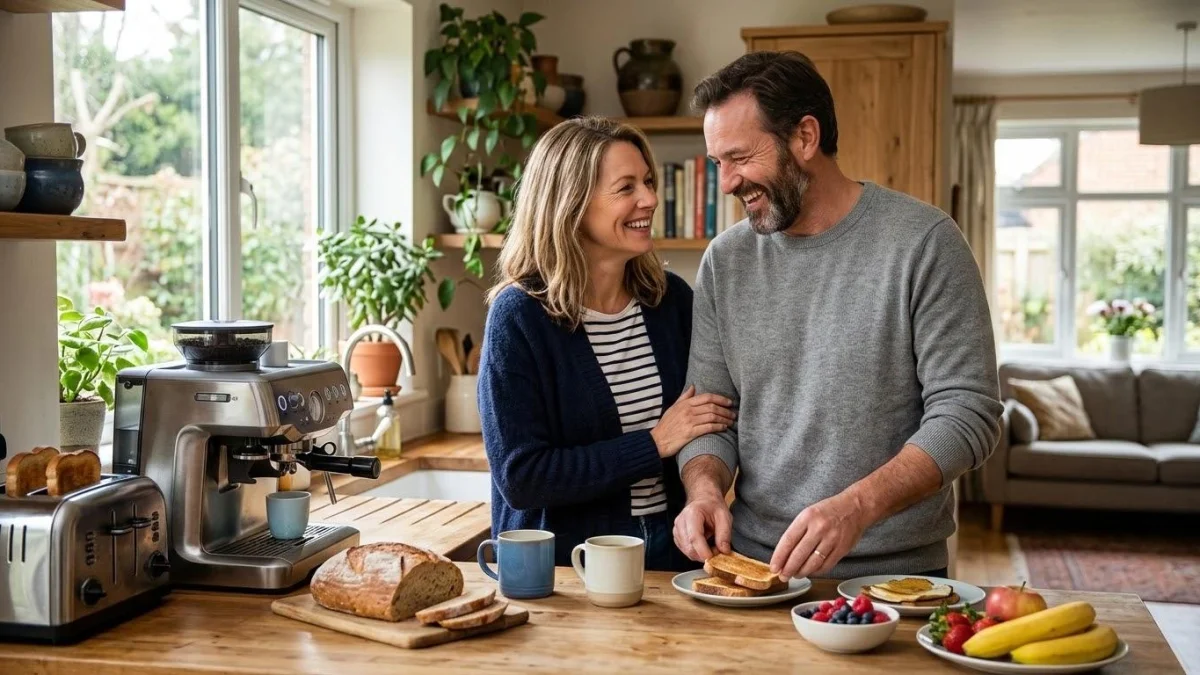
The habit I’ve noticed that shows up most consistently is a recurring stretch of unstructured, low-stakes time together — what I think of as a "nothing-in-particular" ritual. A slow Saturday-morning coffee that nobody rushes. A walk with no destination. Puttering in the same room while one cooks and the other reads. The defining feature isn't the activity. It's that the time isn't for anything. No agenda to get through, no problem to solve, no performance of romance.
This runs against most of what couples are told. The cultural script says connection has to be engineered: the planned date night, the weekend getaway, the structured "state of the union" conversation. Those things can be good. But they all carry a quiet pressure to produce something — a nice time, a resolved issue, a feeling of closeness on demand. The couples who seem genuinely at ease with each other have learned that closeness usually arrives sideways, in the time you weren't trying to make it happen.
Why Doing Nothing Together Does So Much
There's a well-supported idea in relationship science called self-expansion theory — the notion that part of what we want from a partner is to feel our own world grow through them, to keep encountering them as someone still interesting rather than fully catalogued. Novelty and shared discovery feed this. But so does something subtler: simply being in each other's company without a transaction attached.
When time together is always purposeful, a partner can quietly become another item on the to-do list — a person you coordinate with rather than a person you enjoy. Unhurried weekend time reverses that. It lets each person be experienced again as company rather than logistics. That shift, repeated weekend after weekend, is what keeps a marriage feeling like a relationship instead of a household operations meeting.
It also creates the conditions for what researchers call perceived responsiveness — the sense that your partner sees you, gets you and is on your side. Responsiveness rarely shows up in scheduled, high-stakes conversations. It surfaces in the offhand moment: the half-finished thought you mention while doing dishes, the small thing you notice out loud on a walk. You can't manufacture those moments on a calendar. You can only leave enough unclaimed time for them to happen.
What It Looks Like When This Is Missing
The absence of this habit is easy to miss because nothing dramatic is wrong. The couple is busy, productive, even affectionate in passing. But every shared hour has a function — errands, kids, hosting, planning. Weekends become a second shift of accomplishment, and the two people orbit each other efficiently without ever quite landing.
What I notice in these marriages is a particular kind of drift. Not conflict, exactly. More a slow accumulation of small distances — fewer inside jokes, less idle conversation, a creeping sense of living parallel lives under one roof. When couples tell me they feel more like roommates or co-managers than partners, this is almost always part of the story. They haven't stopped loving each other. They've stopped spending any unproductive time in each other's company, and unproductive time turns out to be where a lot of the intimacy lived.
How To Protect It Without Turning It Into Another Project
The instinct, once you hear this, is to optimize it — to schedule the unstructured time, set rules, make it a system. Resist that. The moment a slow Saturday morning becomes a mandatory connection ritual with expectations attached, it stops doing the thing that made it work.
A lighter touch holds up better. Guard one recurring window from the usual demands and leave it genuinely open. Keep the bar low; the point is presence, not a great experience. And let it be a little boring sometimes — boredom in good company is underrated, and it's often the soil the best conversations grow out of. What matters is the repetition and the lack of pressure, not the quality of any single instance.
What This Comes Down To
Strip away the specifics and the pattern is simple: the happiest couples treat each other's company as something worth having for its own sake, not only as a means to running a life together. The weekend ritual is just the most reliable place that value gets expressed, because the weekend is where there's finally a little room.
This isn't about effort or grand romantic gestures, and it isn't about discipline. It's about leaving an opening — a stretch of time you refuse to fill with tasks — and trusting that being unhurried together does quiet, durable work that no planned event can replicate. The couples who keep that opening tend to be the ones who, years in, still seem to actually like each other.
If you want to understand more about what keeps a partnership thriving over the long run, take my Relationship Flourishing Scale — it reveals where your relationship draws its strength and where it could use more room to grow.
About the Author
Mark Travers, Ph.D., is the founder of Therapytips.org, where he helps match new clients with the right therapist on the team — request a session or get matched here. Mark received his B.A. in psychology, magna cum laude, from Cornell University and his M.A. and Ph.D. from the University of Colorado Boulder. His academic research has been published in leading psychology journals and featured in major outlets including The New York Times and The New Yorker. He is a regular contributor for Forbes, CNBC, and Psychology Today.
More Articles For You
-
Psychologist: This Is The Fastest Way Out Of A Negative Thought Spiral
You can never think your way out of a thought trap, the solution lies somewhere else.
-
Psychologist: 1 Habit All Intelligent People Swear By
Most of us dump this habit the moment we’re out of school. The ones who stick with it benefit exponentially.