
A Psychologist's Guide To Measuring Your Stress Recovery
From anxiety to fatigue, your nervous system's recovery pace impacts every area of life. Find out where you stand.

In business culture, resilience is often framed as grit: push harder, stay sharp and outwork the stress. However, any psychologist will tell you that this isn't a universal truth. The difference between a sustainable leader and a burned-out one is not how much pressure they face; stress is inevitable in high-performance environments.
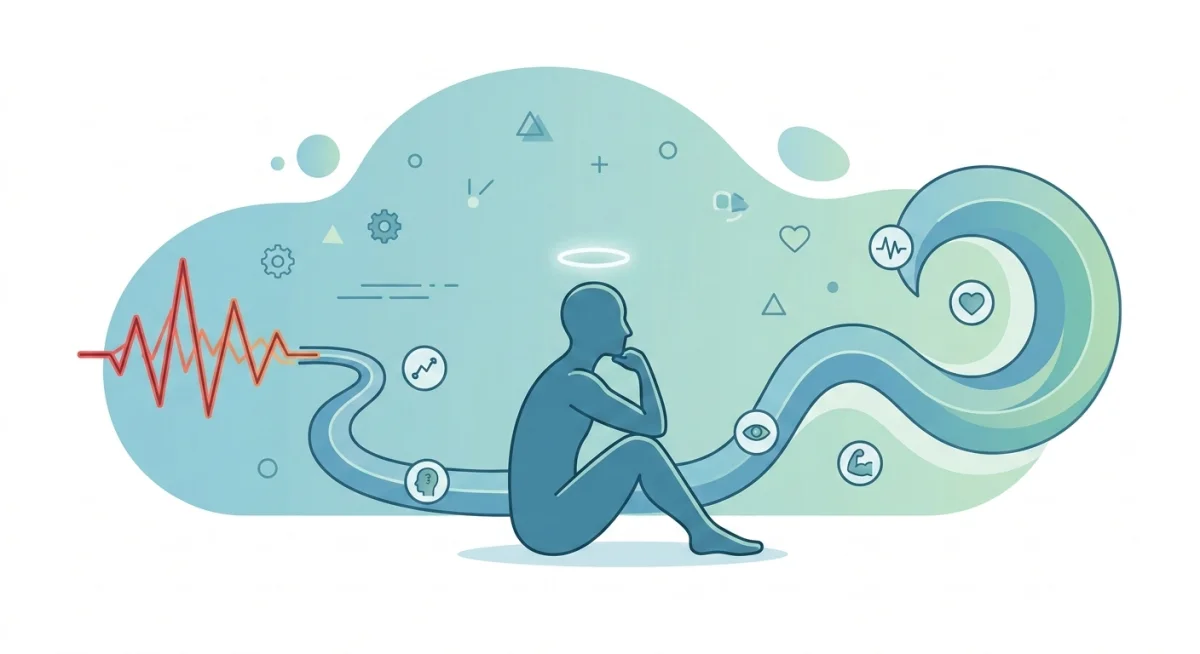
In reality, true resilience is a matter of recovery, not endurance. More specifically, it lies in how efficiently your autonomic nervous system can shift from high alert sympathetic arousal back to parasympathetic restoration.
Think of it as your internal thermostat. When stress rises, your system heats up. When the challenge passes, it should cool down. If it doesn't, the system stays overheated. Over time, that strain becomes cognitive fatigue, sleep disruption, irritability and eventually burnout.
To help you better understand your own unique stress thermostat and how it might be influencing your life, you can take the Stress Recovery Test to get a personalized breakdown of your capacity to cool down.
The Biology Behind Your Stress Thermostat
The autonomic nervous system has two primary branches:
- The sympathetic branch mobilizes the body for action by increasing your heart rate, raising your cortisol rises and narrowing your attention
- The parasympathetic branch restores equilibrium through processes associated with rest and digestion
As research from the Journal of Affective Disorders explains, healthy functioning is defined not by low reactivity, but by flexibility. This means that individuals who show strong activation during stress and efficient return to baseline afterward demonstrate what researchers refer to as "autonomic flexibility."
Heart rate variability (HRV) is one measurable marker of this flexibility. More specifically, higher HRV is associated with better emotional regulation, executive functioning and stress resilience. Lower HRV, on the other hand, is linked to chronic stress and increased risk for cardiovascular strain. In simple terms, this means that a healthy nervous system responds strongly when needed and recovers quickly when the demand ends.
Of course, stress does not only live in the heart; it persists in the mind. According to burnout research published in Cognitive Therapy and Research, repeatedly replaying stressful interactions only prolongs emotional activation. Even when the external event has ended, replaying it over and again in your mind will keep the sympathetic system engaged.
As the study notes, rumination is also linked to anxiety, depression and impaired problem solving. In contrast, individuals who can cognitively decouple from stressors show faster emotional recovery. Importantly, this process of "decoupling" doesn't entail avoiding your stressors. It involves processing and releasing, rather than perseveratively looping through them.
Adaptive Capacity: What You Do After Stress
The key to effectively recovering after a stressful day lies in behavior — or, more specifically, your coping strategies. Psychological researchers distinguish between adaptive and maladaptive strategies:
- Adaptive strategies include physical movement, social connection and deliberate relaxation, which activate parasympathetic processes
- Maladaptive strategies typically entail passive distraction, such as excessive scrolling or stress eating, which dampen awareness without restoring regulation
It's well-established that individuals who engage in adaptive coping behaviors report lower burnout and better sleep quality.
The main problem high performers often face is the assumption that productivity equals endurance — when, in reality, strategic recovery behaviors are essential for protecting cognitive performance. Unfortunately, corporate culture frequently rewards visible stamina. The executive who answers emails at midnight appears dedicated, while the founder who never disengages seems driven.
Yet burnout research consistently identifies a lack of recovery as a primary predictor of emotional exhaustion. This is because burnout isn't just "stress," which is both natural and manageable. Rather, it's the result of chronic workplace stress that has not been successfully managed.
This distinction is critical. Stress alone does not cause burnout; unresolved stress does. If your internal thermostat never resets, the cost accumulates silently.
Measuring And Resetting Your Stress Thermostat
The Stress Recovery Test is not a clinical tool. It does not diagnose anxiety disorders, nor cardiovascular diseases. Instead, it serves to translate established psychophysiological principles into a more reflective format.
Self-report measures are an effective and accessible way to meaningfully increase awareness of regulation patterns. The value of these kinds of tests isn't the scores or results they offer, but rather the behavioral adjustments that they prompt.
The encouraging news is that autonomic resilience is trainable:
- Controlled breathing techniques (particularly slow diaphragmatic breathing) can increase vagal tone and improve HRV
- Regular exercise enhances stress recovery speed
- Mindfulness practice strengthens prefrontal regulation of emotional responses
- Even brief moments of social interaction can activate parasympathetic pathways
Small, consistent practices like these can improve both your subjective well-being and physiological markers of stress.
In high-performance cultures, the most effective professionals are not those who remain activated indefinitely. They are the ones whose systems respond intensely when necessary, and reset efficiently when the challenge eventually passes. That is what a well-calibrated internal thermostat looks like. Since pressure will always be part of ambition, the question is whether your nervous system knows how to cool down.
How easily do you recover from stress? Take the 8-question Stress Recovery Test here and find out how efficient your internal thermostat is.
About the Author
Mark Travers, Ph.D., is the founder of Therapytips.org, where he helps match new clients with the right therapist on the team — request a session or get matched here. Mark received his B.A. in psychology, magna cum laude, from Cornell University and his M.A. and Ph.D. from the University of Colorado Boulder. His academic research has been published in leading psychology journals and featured in major outlets including The New York Times and The New Yorker. He is a regular contributor for Forbes, CNBC, and Psychology Today.
More Articles For You
-
Psychologist: Only This 1 Habit Can Break Your Validation Addiction
Seeking approval can turn into an addiction. Only one habit can protect you from it.
-
Post-Traumatic Stress and how to cure it in one session.
What is the Rewind Technique?