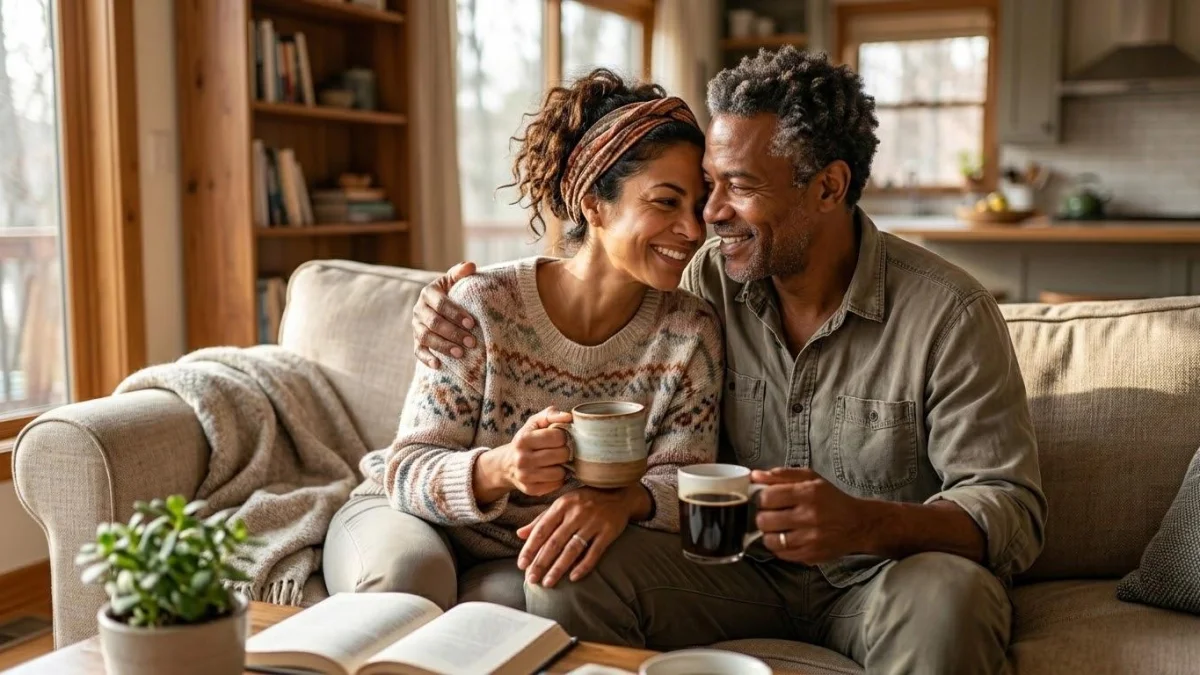
Psychologist: The 7 Weekend Habits Of Highly Romantic Couples
Romance isn't grand gestures. The couples who stay deeply connected protect a quieter, more reliable kind of weekend.

The couples who stay deeply connected over years tend to share a set of weekend patterns that are easy to miss because none of them look like "romance" in the cinematic sense. There are no surprise getaways or dramatic gestures. What I've come to think of as highly romantic couples are doing something quieter and more durable: they're using their weekends to repair, recalibrate, and reinforce the bond that the workweek tends to erode.
Here are the seven habits research keeps pointing back to.
1. They Protect At Least One Unstructured Window Together
Highly romantic couples reserve a stretch of time — sometimes only an hour, sometimes a full morning — that isn't pre-loaded with errands, screens, or social obligations. The goal isn't to do something special. The goal is to be available to each other without an agenda.
This is where what John Gottman called bids for connection actually live. A bid is any small attempt one partner makes to engage the other — a comment about a bird outside the window, a hand brushed across a shoulder, a half-finished thought said out loud. Gottman's research found that couples who stay together turn toward these bids the vast majority of the time, while couples who drift apart miss them. You can't turn toward a bid you never had time to register.
2. They Build In A Shared Novelty Ritual
Something the deeply connected couples I've observed all do — though they often don't notice they're doing it — is introduce a small dose of novelty into their weekend together. A new coffee shop. A different walking route. A movie neither of them has seen. A recipe that requires both of them in the kitchen.
The mechanism here comes from Arthur Aron's self-expansion model, which suggests that shared novel and challenging experiences expand the couple's sense of self and reactivate the early-relationship feelings of growth and excitement. It doesn't have to be dramatic. It has to be new enough to require both partners to pay attention.
3. They Debrief The Week Without Trying To Solve It
There's a particular kind of weekend conversation that highly romantic couples have, and it rarely produces conclusions. One partner describes a frustrating coworker. The other doesn't immediately suggest a fix. They ask a follow-up. They sit with it. The conversation drifts.
This is emotional attunement in practice, and it sits at the heart of emotionally focused therapy — the framework Sue Johnson developed around attachment in adult relationships. When a partner feels heard rather than handled, the underlying message is that the relationship is a safe place to be a full person. Problem-solving has its place, but it's not what the weekend debrief is for.
4. They Share A Small Recurring Ceremony
Most highly romantic couples have at least one weekend ritual so embedded in their routine that they'd feel something missing if it didn't happen. Sunday morning pancakes. Friday night takeout from the same place. A walk after dinner. Reading in bed on Saturday morning before either of them gets up.
The psychology here draws on attachment theory. Predictable, positively-charged rituals function as what attachment researchers call a "secure base" — a reliable anchor that signals the relationship is stable and that one's partner is dependably present. The ritual itself is almost incidental. What matters is that it happens, that it's theirs, and that both of them protect it.
5. They Practice Physical Co-Regulation
I want to be careful with this one because it's often misunderstood as being about sex. It isn't. Highly romantic couples engage in a lot of low-stakes, non-sexual physical contact — a hand on the back while passing in the kitchen, feet touching on the couch, an arm across the shoulders while standing in line.
Research on physical touch and the nervous system shows that warm, non-sexual contact with a trusted partner lowers physiological stress markers and helps the body return to a regulated state more quickly. Couples who treat physical proximity as a default rather than a special occasion are essentially co-regulating throughout the weekend, and the cumulative effect is a felt sense of safety that's hard to manufacture any other way.
6. They Make Genuine Space For Each Other's Solo Time
This one looks counterintuitive, but the most romantic couples I know are also the ones who can leave each other alone without consequence. One partner goes to a yoga class. The other reads in the backyard. They reconvene without resentment, without needing to debrief the time apart.
This is interdependence theory in action — the recognition that closeness is reinforced, not threatened, by each partner having a sturdy individual life. Couples who collapse into each other on weekends tend to deplete the very autonomy that makes their togetherness feel chosen rather than obligatory. Protected solo time is, paradoxically, one of the most reliable predictors of weekend connection.
7. They End The Weekend With A Forward-Looking Gesture
The seventh habit is the smallest and the easiest to overlook. Highly romantic couples tend to end Sunday with something that points the next week forward together — a plan for Wednesday's dinner, a text exchange about a podcast one of them wants the other to hear, a calendar item placed on Thursday because Thursday tends to be a hard day.
This taps into what positive psychology researchers describe as anticipatory positive affect — the well-documented finding that the expectation of a shared good experience generates a measurable lift in the present. It also signals something important to the relationship: that the weekend wasn't a self-contained island of connection, but part of a continuous one.
None of these habits, on their own, will make or break a relationship. What's striking about the couples who do all seven, or even most of them, is how unremarkable it looks from the outside. There's no fireworks. There's just a Saturday that ends with both people feeling more themselves, and more together, than they did when it began.
That, I've come to think, is what romance actually looks like in adulthood. Not the gesture. The pattern.
If you want to know how your own partnership is doing on the dimensions that research links to long-term romantic flourishing, you can take my Relationship Flourishing Scale — it'll show you where you and your partner stand on the markers that distinguish thriving couples from drifting ones.
About the Author
Mark Travers, Ph.D., is the founder of Therapytips.org, where he helps match new clients with the right therapist on the team — request a session or get matched here. Mark received his B.A. in psychology, magna cum laude, from Cornell University and his M.A. and Ph.D. from the University of Colorado Boulder. His academic research has been published in leading psychology journals and featured in major outlets including The New York Times and The New Yorker. He is a regular contributor for Forbes, CNBC, and Psychology Today.
More Articles For You
-
Psychologist: A Sneaky Habit That Cuts You Off From Your Gut Instinct
Ignoring your instincts will dull them, but this habit will kill them.
-
Post-Traumatic Stress and how to cure it in one session.
What is the Rewind Technique?