3 Parenting Strategies That Help Highly Sensitive Children Thrive
A psychologist explains how specific parenting strategies help sensitive children feel understood and confident.

Highly sensitive children are often deeply perceptive, emotionally tuned-in and easily overwhelmed. They are not "problem children" to be fixed but temperamentally unique individuals who thrive (or struggle) depending on how environments and caregivers respond to them.
Scientific research shows that this sensitivity isn't just a parenting buzzword: it's a measurable individual difference (often referred to as environmental and sensory sensitivity), and it shapes how children respond to both supportive and stressful influences in their environment.
Here are three evidence-based ways to support your highly sensitive child.
1. Highly Sensitive Kids Thrive On Support That Build Emotional Security
One of the most consistent findings in developmental science is that sensitive children are especially affected by the quality of caregiving they receive, for better and for worse.
In a large longitudinal study published in Development and Psychopathology, researchers followed more than 600 children aged 9 to 12 and found that children with higher environmental sensitivity benefited most from supportive parenting. Those who perceived their parents as less supportive were more likely to develop attachment vulnerabilities and internalizing problems like anxiety.
This research builds on a broader empirical framework showing that sensitive children process social cues and emotional context more deeply than peers, which can translate into heightened responsiveness to caregivers' warmth and consistency.
To put this into practice, here are the first few steps you can follow:
- Tune in before you respond. Reflective listening, which is the practice of naming what your child feels (e.g, "It sounds like that was really overwhelming"), helps them feel understood and less alone.
- Be predictable and available. Routines and consistent responses help your child feel safe enough to explore their world.
- Respond to distress with presence over problem-solving. Sometimes, emotional connection matters more than fixing the issue.
Sensitive children aren't needy; they're unusually responsive. Your responsiveness gives them a secure base from which to grow.
2. Highly Sensitive Kids Build Emotional Regulation Through Co-Regulation
Highly sensitive children tend to experience emotions intensely and may struggle with emotional regulation. This isn't because they can't regulate, but rather because their processing depth and reactivity are higher.
Research linking early sensitivity with later tendencies toward rumination and depressive symptoms highlights that, in the absence of supportive coping environments, these children are at risk of internalizing distress.
For instance, in a 2022 longitudinal study in European Child & Adolescent Psychiatry, researchers found that when highly sensitive children rated highly experienced permissive parenting, they developed greater rumination, a cognitive style linked to depression, compared with those in more structured environments.
The key takeaway from the science is that pre-verbal regulation support and co-regulation, combined with intentional emotional coaching helps sensitive children learn to manage intense feelings over time.
Here are some evidence-inspired strategies you can begin working with:
- Label and mirror emotions. Rather than dismissing intense reactions ("it isn't so bad"), say what you observe. For instance, "I see how upset you are, that sounds really hard."
- Co-regulate before you ask them to self-regulate. Use calm grounding techniques together, like deep breathing, quiet walks or putting on soft music, before expecting them to manage independently.
- Support problem-solving when calm. Once emotions settle, ask gentle questions like, "What do you think might help next time?"
Parent-child co-regulation teaches emotional language and coping skills rooted in connection, not control.
3. Highly Sensitive Kids Need Calm, Predictable Settings
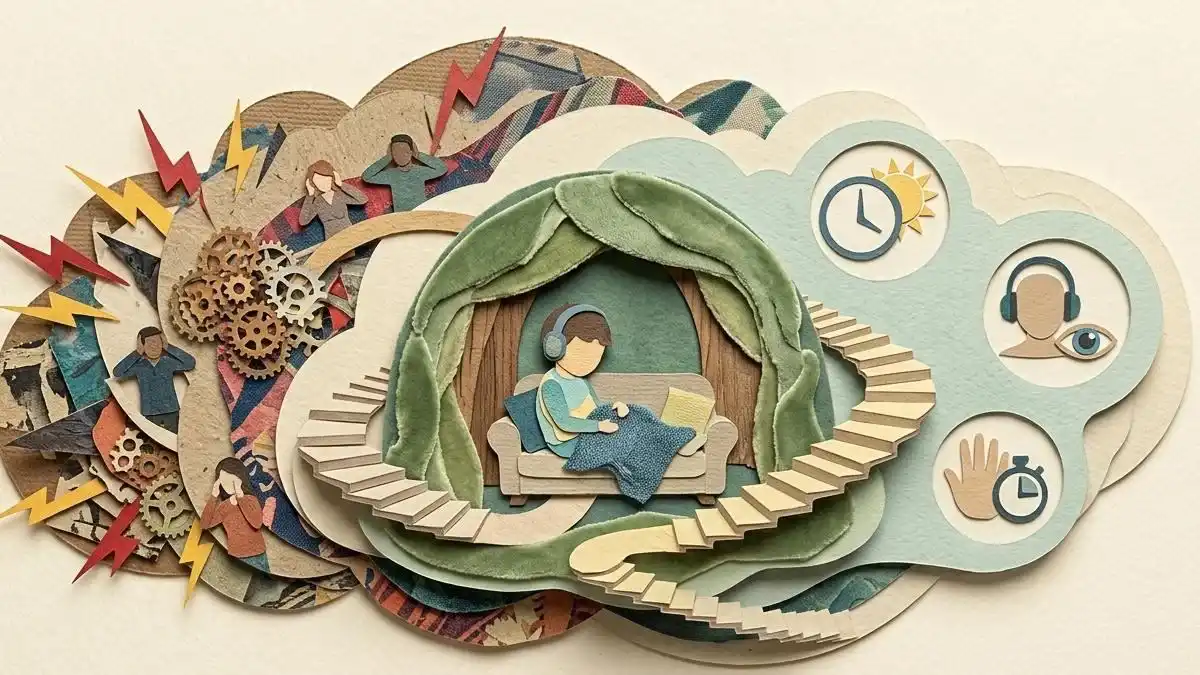
At a basic level, environmental sensitivity reflects physiological and psychological responsiveness to external stimuli. These include lights, sounds, emotional reactivity, textures, transitions and social contexts.
According to 2023 research on sensory processing sensitivity, children with high sensitivity are more easily overstimulated than others. For this reason, they will benefit more from calm, supportive environments.
It's important to note that creating a predictable, sensory-friendly space for your child doesn't mean that you're "coddling" or "spoiling" them. In reality, it's akin to building a scaffolding that your child can use to engage with challenges without becoming overwhelmed.
Some science-guided ways that can shape your environment to set your highly sensitive child up for success include:
- Routine anchors. Predictable daily rhythms such as morning routines, wind-down signals and mealtime rituals reduce cognitive load and support emotional regulation.
- Controlled sensory exposure. When environmental stimuli are intense, you can offer respite spaces by moving them to a quiet room temporarily, lowering the intensity of the lighting or even providing a weighted blanket or noise-cancelling headphones.
- Advance notice of transitions. Sensitive children process change more deeply. Giving a "heads up" before transitions (e.g., "In ten minutes we're leaving for school") helps them prepare mentally.
These strategies aren't about limiting experiences. Instead, they provide a buffer of stability so sensitive children can fully benefit from positive stimuli and manage negative ones.
Why Highly Sensitive Children Benefit So Strongly From Supportive Contexts
The research converges on one clear pattern: environmental sensitivity functions as an amplifier of experience.
Sensitive children are more reactive to negative environments and more responsive to positive ones. This has sometimes been called differential susceptibility, meaning that sensitive children are disproportionately impacted by both adverse and nurturing conditions.
This doesn't imply fragility but responsiveness: the very trait that makes these children thoughtful, observant, creative and compassionate can also intensify stress when unmet by supportive environments, and intensify growth when supported well.
In practice, this means:
- Supportive parenting matters more for sensitive children than for less sensitive ones
- Emotional skills taught with connection are internalized more deeply and last longer
- Structured environments reduce overwhelm and support engagement
When parents understand why their sensitive child reacts strongly, they can move from frustration to strategy. Over time, these strategies help highly sensitive children learn that their sensitivity is not a liability or a weakness, but a strength that can be used to fuel deep empathy, creativity and resilience when nurtured minds are paired with reliable support.
Take my science-inspired Highly Sensitive Person Quiz to know if you or your child might be extra reactive to external stimuli and environments.
About the Author
Mark Travers, Ph.D., is the founder of Therapytips.org, where he helps match new clients with the right therapist on the team — request a session or get matched here. Mark received his B.A. in psychology, magna cum laude, from Cornell University and his M.A. and Ph.D. from the University of Colorado Boulder. His academic research has been published in leading psychology journals and featured in major outlets including The New York Times and The New Yorker. He is a regular contributor for Forbes, CNBC, and Psychology Today.
More Articles For You
-
Psychologist: This Habit Is The Biggest Motivation Killer For Adults
Seeking external validation is costing you more than you know, and the first thing to go is your sense of autonomy.
-
Post-Traumatic Stress and how to cure it in one session.
What is the Rewind Technique?