Answer the following 20 questions to the best of your ability.
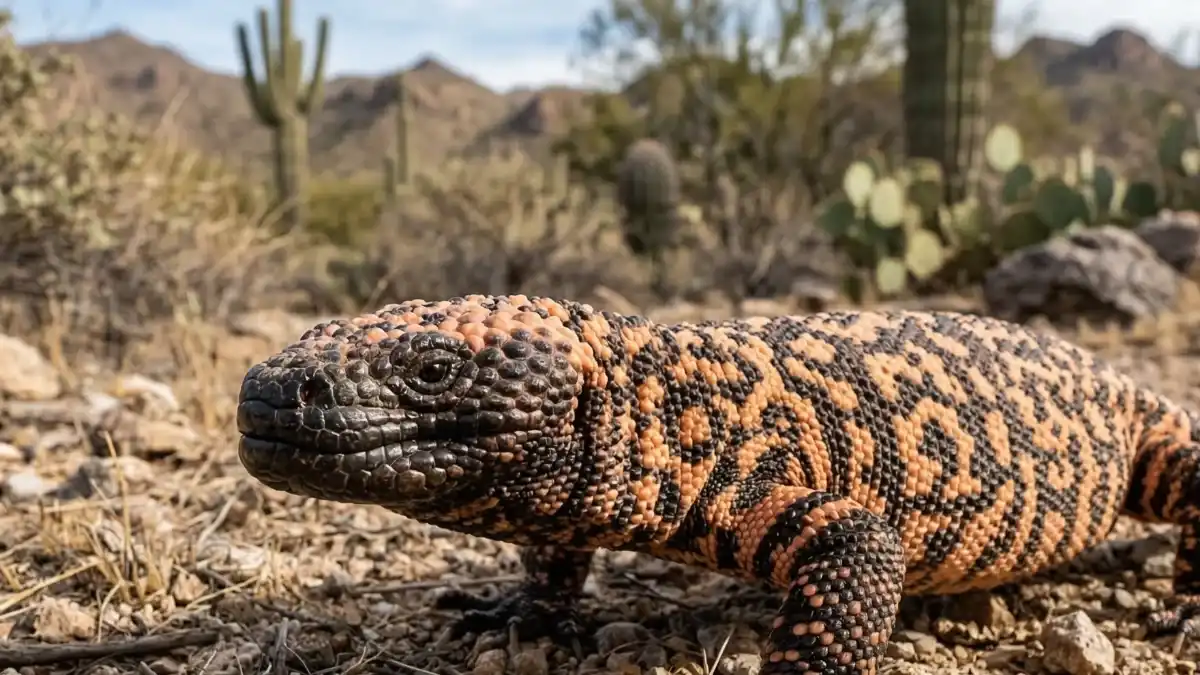
1. What is the primary difference between amphibians and reptiles? Amphibians have moist, scaleless skin; reptiles have scales Reptiles lay eggs in water; amphibians lay eggs on land Amphibians are warm-blooded; reptiles are cold-blooded Reptiles have gills; amphibians have lungs
2. Which snake is famous for spending its life looping beautifully over rainforest branches? King Cobra Green Tree Python Rattlesnake Anaconda
3. How do most reptiles regulate their body temperature? By sweating and panting Through internal metabolic heat By moving between sun and shade By shedding their skin
4. What unique survival ability does the North American wood frog possess? It can fly short distances It can breathe fire It can freeze almost completely solid in winter and thaw in spring It can survive in boiling water
5. Which of these animals is NOT a true reptile? Iguana Sea Turtle Salamander Crocodile
6. How do snakes effectively "smell" their environment? Through tiny pores on their belly By flicking their tongue to capture particles for the Jacobson's organ Through specialized nostrils that can detect heat Using their highly sensitive eardrums
7. What is the largest living species of lizard? Gila Monster Marine Iguana Nile Monitor Komodo Dragon
8. Which turtle species is famous for undertaking massive, trans-oceanic migrations to nest? Snapping Turtle Leatherback Sea Turtle Box Turtle Painted Turtle
9. What is a defining characteristic of a caecilian? It is a lizard that runs on water It is a legless amphibian that resembles a worm or snake It is a turtle without a shell It is a highly venomous toad
10. Why do chameleons frequently rock back and forth as they walk? To mimic swaying leaves and avoid predator detection To generate internal body heat To communicate aggression to rivals To help their eyes focus on prey
11. Which crocodilian is exclusively native to the United States and China? Caiman Gharial Alligator Saltwater Crocodile
12. What is "autotomy" in lizards? The ability to automatically change color The ability to drop their tail to escape predators The process of digesting their own shed skin The ability to reproduce without a mate
13. How do many geckos manage to stick to glass and ceilings? Sticky sap secreted from their pores Tiny suction cups on each toe Microscopic hairs (setae) that utilize van der Waals forces Sharp, microscopic claws that hook into smooth surfaces
14. Which amphibian is famous for its highly toxic skin secretions, traditionally used by indigenous hunters? Bullfrog Poison Dart Frog Hellbender Salamander Cane Toad
15. Tuataras, found only in New Zealand, are unique because they possess what anatomical feature? A venomous spur on their heel Two separate stomachs Gills that persist into adulthood A rudimentary "third eye" (parietal eye) on top of their head
16. What makes the diet of the King Cobra highly unusual among snakes? It only eats fruit It primarily eats other snakes (ophiophagy) It filters plankton from water It solely consumes bird eggs
17. How do marine iguanas in the Galapagos rid their bodies of excess salt from the ocean? They sweat it out through their scales They process it through highly efficient kidneys They sneeze it out through specialized nasal glands They absorb it into their tail fat
18. Which feature is completely unique to turtles and tortoises among all living vertebrates? Their shell is directly fused to their spine and ribs They have no teeth They can breathe through their cloaca They never stop growing
19. The axolotl is a strange amphibian that retains its larval features (like external gills) into adulthood. What is this phenomenon called? Metamorphosis Neoteny Symbiosis Parthenogenesis
20. What is the primary function of a rattlesnake's rattle? To attract mates To communicate with other rattlesnakes To lure curious prey To warn larger animals to stay away