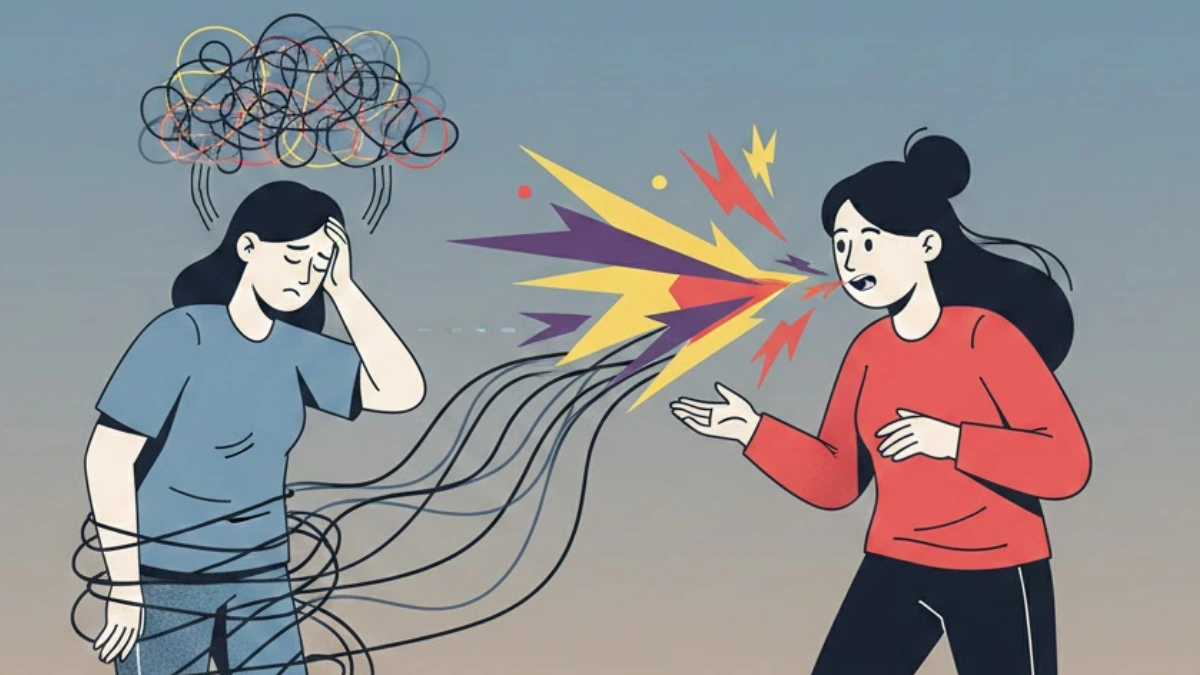
5 Signs You're Emotionally Draining The People Around You
Emotional fatigue isn't always intentional. Here's how certain habits can overwhelm others without you realizing it.

Most people know what it feels like to be emotionally drained by someone else. But what few consider is the possibility that they might be draining to others at times, usually unintentionally. Being someone who "drains" others doesn't necessarily mean that you're toxic or bad. In fact, it often means you're overwhelmed, under-supported or stuck in patterns no one taught you to recognize.
It might even mean that you're deeply empathic, stuck in habitual coping patterns or lacking strategies to regulate your own emotional load. The journey to better emotional regulation should begin with recognizing the problematic loops one is stuck in.
Here are five signs that the way you communicate your problems leaves little space for two-way interaction and problem-solving.
1. You Vent More Than You Process
When venting becomes your primary form of emotional communication, it can overwhelm others. Instead of just sharing frustrations, you might cross the line and recount the same issues repeatedly without moving toward solutions, and rely on people to validate or fix your feelings.
Examples of draining venting patterns include:
- Repeating the same problem without taking steps toward resolution
- Offloading emotions immediately and intensely
- Turning every conversation into a dumping ground for stress
- Using friends as your main coping mechanism instead of one of many
A 2022 study published in Frontiers in Psychology found that repeated exposure to others' intense negative emotions increases emotional contagion and stirs stress in the listener as they absorb the speaker's distress, even while wanting to help.
This is usually a result of never being taught healthy self-regulation or feeling emotionally overloaded. The intention, of course, isn't to burden others; it's often to avoid being consumed by one's own feelings. However, in an attempt to avoid drowning by holding someone's hand, the individual can actually end up dragging their listener into their emotional storm, too. This can trigger their stress response, and, as a result, supporting you can become an emotionally exhausting experience for them.
2. You Rely Heavily On Others For Validation Or Reassurance
It's totally human to want others to reassure you, especially when you feel uncertain or anxious. But constantly seeking validation from others by asking emotionally insecure questions like, "Am I doing the right thing?" or, "Did I upset you?" can make those around you feel responsible for your emotional state.
They may feel burdened with the task of soothing you, which can lead to fatigue or frustration, especially if your reassurance needs are frequent or intense.
You might lean on others because that's how you've learned to weather emotional storms. But for the listener, the emotional labor adds up. They may feel responsible for stabilizing your self-esteem or calming your worries, which can lead to compassion fatigue over time.
3. You Struggle To Respect Boundaries
The reason why it's so easy to violate someone's boundaries is because they're often subtle and the listener is trying to go the extra mile in trying to support you. Violations, however, are still violations, and their effects compound over time. Sending multiple texts, dominating during conversations, oversharing or expecting constant access are all examples of crossing lines that are often invisible in social situations but never non-existent.
If someone feels their space is consistently invaded, they may feel drained, pressured or guilty for wanting distance. Meanwhile, you might not even realize you're overstepping.
These behaviors are often driven by anxiety, loneliness or a fear of abandonment. They don't mean you don't care, but they do make considerable demands on others' emotional bandwidth.
4. Your Communication Style Is Negative Or Chaotic
Communication isn't just about content; it's about energy and tone. So, while the reason for your emotional outburst or venting session might be legitimate, the way you choose to communicate your problem could either make things better or worse, especially for the listener. Here are a few patterns that lean on the latter:
- Chronic complaining or focusing on what's wrong
- Catastrophizing small issues
- Interrupting or talking over others
- Turning every conversation into a debate
- Passive-aggressive comments or unclear communication
These patterns require others to regulate the tension in the interaction, read between the lines or stay on high alert to avoid conflict, which can make any interaction with you feel like work.
5. You Don't Reciprocate Emotional Support
You might find yourself talking more about your own life than asking about theirs, forgetting to check in after someone has supported you or overlooking their emotional state entirely. You might expect them to listen to your struggles without offering the same in return, or react strongly to your own needs while missing theirs.
A 2024 cross-sectional survey of hospital physicians found that persistent one-sided emotional support contributes to empathy fatigue. This suggests that imbalance alone, not conflict or negativity, can drain even highly trained caregivers.
These patterns are especially common when someone is feeling overwhelmed themselves; stress naturally narrows our attention inward, making it harder to notice what others need or to respond with the care and presence they deserve. Awareness of these imbalances is the first step toward more mutually nourishing connections.
How To Shift The Draining Dynamic
While leaning on others is natural, self-regulation is also a skill one needs to hone and rely on every now and then. Not only does it help you hold yourself together in moments of upheaval, but it can also help develop feelings of self-reliance and autonomy.
Here's a few things you can do to develop the habit of self-soothing in tough moments:
- Build self-regulation skills. Prioritize practices that help you manage your own emotions before turning to others. Journaling, breathing exercises, mindfulness or therapy can build your capacity to cope independently.
- Communicate with intention. When you want to share, ask for permission first by asking something like, "Can I talk to you about something heavy?" This lets the other person prepare emotionally, so they're not always caught off guard.
- Create emotional balance. Try to mix venting with constructive conversation. Ask yourself, "Do I want to brainstorm solutions, or do I just want to be heard?" This can make your support requests feel less draining and more collaborative.
- Foster empathy boundaries. Recognize when your empathy feels like a burden on others. If you're leaning too heavily on someone else, remind yourself it's not their responsibility to fix your emotions and that you're more than capable of holding space for your own emotions.
- Nurture your support network. Develop a circle of people (friends, therapist, support groups) you can talk with. This ensures no one individual becomes your only emotional outlet. Studies show that individuals with strong social support networks experience less emotional exhaustion even when others push boundaries, highlighting the protective effect of having multiple outlets for stress.
Recognizing that you might be draining others doesn't make you a "bad" person, it makes you human. It often means you deeply care or feel things intensely but lack strategies for regulating or expressing your emotions in a balanced way.
By building emotional self-awareness, communicating with intention and creating healthier boundaries, you can transform your relationships. You'll still care deeply, but you'll also preserve your energy and honor the emotional capacity of those around you.
If these draining patterns feel familiar, your attachment style may be driving more of the dynamic than you realize. Take the Anxious Attachment Test to understand what's underneath.
About the Author
Mark Travers, Ph.D., is the founder of Therapytips.org, where he helps match new clients with the right therapist on the team — request a session or get matched here. Mark received his B.A. in psychology, magna cum laude, from Cornell University and his M.A. and Ph.D. from the University of Colorado Boulder. His academic research has been published in leading psychology journals and featured in major outlets including The New York Times and The New Yorker. He is a regular contributor for Forbes, CNBC, and Psychology Today.
More Articles For You
-
Psychologist: 1 Habit All Intelligent People Swear By
Most of us dump this habit the moment we’re out of school. The ones who stick with it benefit exponentially.
-
Post-Traumatic Stress and how to cure it in one session.
What is the Rewind Technique?