1 Psychological Trick That Instantly Makes You Exercise Better
A simple shift in how you think about movement may be the key to better workouts and long-term fitness.

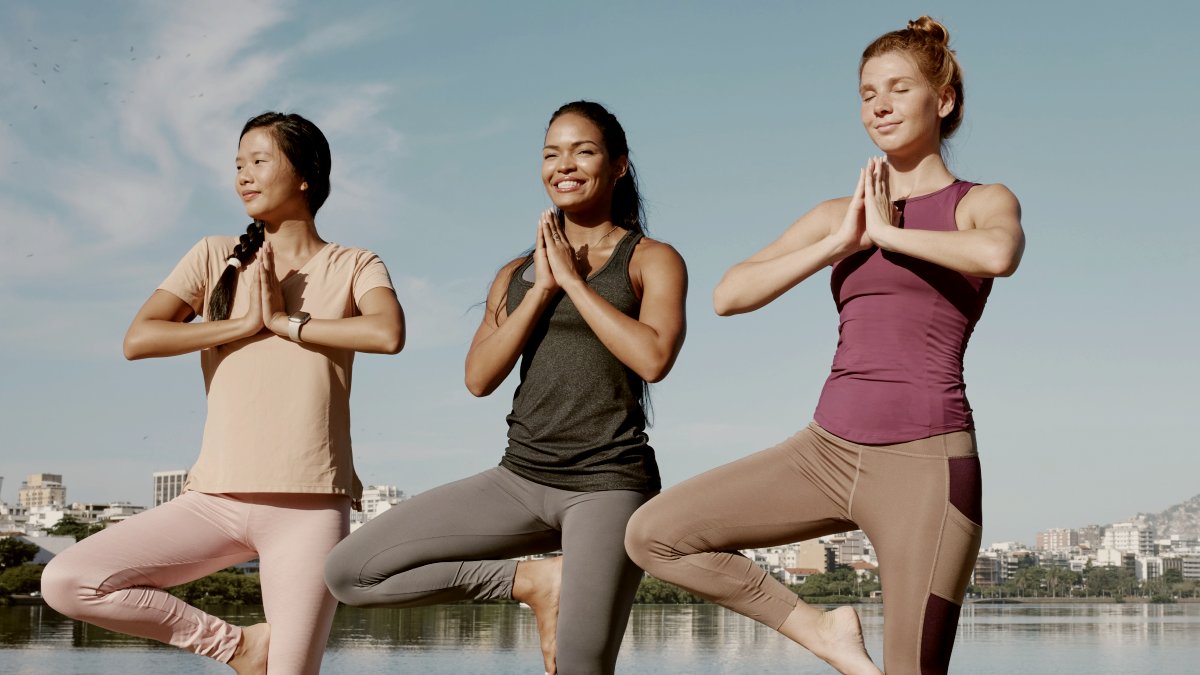
Most people approach their exercise regimen as if it's a solo mission. They put their headphones in, focus on their form, check their smartwatch and get to it. But both biology and centuries of evolutionary psychology suggest otherwise: humans are designed to move together.
Whether it's running side by side, sharing a workout class or even just going on a walk with a friend, exercising socially may be one of the most overlooked "performance enhancers" nature ever designed. Here's why, according to research.
The Evolutionary Science Of Group Exercise
Humans evolved not as lone athletes, but as collaborative movers. Physical activity, for most of our species' history, always happened in groups: hunting, gathering, migrating or dancing around a fire.
This is due to the fact that synchronized movement (such as running, rowing or even breathing in rhythm) triggers the release of endorphins and endocannabinoids, the brain's natural feel-good chemicals. These same pathways help regulate pain, mood, and social bonding.
In a 2015 study published in PLOS One, researchers found that people who rowed in perfect synchrony released double the endorphins compared to those who rowed alone. Their pain tolerance also increased — which suggests that coordinated group movement literally changes how our brains process effort. In other words, if you start moving in sync with someone else, your biology will reward you for it.
Why Group Exercise Feels Easier (Even When It's Not)
Most people have had this common experience: the exact same workout can feel ten times harder when you're alone compared to when you're with company. Some attribute it to a mere social preference, but most people don't realize that this is a psychological fact.
Ample research suggests that exercising in a group is superior to exercising alone. Specifically, it's linked to lower levels of cortisol (the body's main stress hormone) while also increasing oxytocin (the "bonding" hormone associated with trust and empathy). Together, these shifts in brain chemistry make the effort that exercise requires feel significantly more enjoyable, while also enabling a more effective recovery.
Beyond the "feeling" alone, however, a 2023 study from Frontiers in Sports and Active Living, found that the mean class heart rate and mean heart rate for five minutes at the highest intensity were 9% greater during live group exercise — in comparison to both livestreamed classes and exercising alone at home. In other words, exercising with others gives rise to greater cardiovascular intensity, which makes it a decisively better workout, too.
This largely explains why we're drawn to fitness communities. Whether it's CrossFit, yoga classes or even virtual running clubs, our physiology thrives off of social connectedness, even when we're in motion.
The Brain's Hidden Exercise Enhancer
As research shows, neuroscientists have also uncovered an intrinsic mechanism that plays a part in this effect: mirror neurons. In simple terms, these are brain cells that fire both when you perform an action and when you observe someone else doing it. For instance, when you see another person squat, sprint or stretch, your brain rehearses that same motion internally.
On top of this, motor learning — that is, your acquiring of physical skills — is also improved when your mirror neuron system is activated. In this sense, working out with others will sharpen your body awareness and form, while also making it a more enjoyable experience.
This is an integral part of why dancers, team athletes and martial artists perform better when practicing together. While they move side by side, they're simultaneously fine-tuning each other's performance on a subconscious level.
How To Tap Into This Exercise Trick
If you don't have a partner, friend or family that you can work out with on a regular basis, there are still other ways for you to harness this built-in biopsychosocial advantage:
- Find a buddy. If you start working out in the same place at the same time regularly, you might spot someone whose schedule matches your own. Consider asking them if you can work out together, or simply start exercising near them. Having someone whose rhythm you can match, even if it's just once or twice a week, can recreate much of the same neurochemical reward.
- Join a class or community. Even if it's a virtual workout class or group, simply having a shared routine can create accountability. In turn, you can tap into your evolutionary need for synchrony.
- Use music strategically. Songs with strong rhythmic beats can mimic the entrainment effect of group movement, helping your body stay in sync with an external tempo.
- Make movement social. Even casual exercise (like gardening or walking the dog with a neighbor) will encourage you to both stay connected and consistent in your exercise routine.
Exercising with others is a deeply ancestral aspect of both our biological and psychological makeup. Our brains and bodies have evolved specifically to link our efforts with our community members. So yes, there actually is a simple hack for exercising better — you've had access to it all along.
Are you using group exercise to strengthen your connections, or do you feel well-connected already? Take this science-backed test to find out: Social Connectedness Scale
About the Author
Mark Travers, Ph.D., is the founder of Therapytips.org, where he helps match new clients with the right therapist on the team — request a session or get matched here. Mark received his B.A. in psychology, magna cum laude, from Cornell University and his M.A. and Ph.D. from the University of Colorado Boulder. His academic research has been published in leading psychology journals and featured in major outlets including The New York Times and The New Yorker. He is a regular contributor for Forbes, CNBC, and Psychology Today.
More Articles For You
-
Psychologist: Only This 1 Habit Can Break Your Validation Addiction
Seeking approval can turn into an addiction. Only one habit can protect you from it.
-
Psychologist: This Is The Fastest Way Out Of A Negative Thought Spiral
You can never think your way out of a thought trap, the solution lies somewhere else.