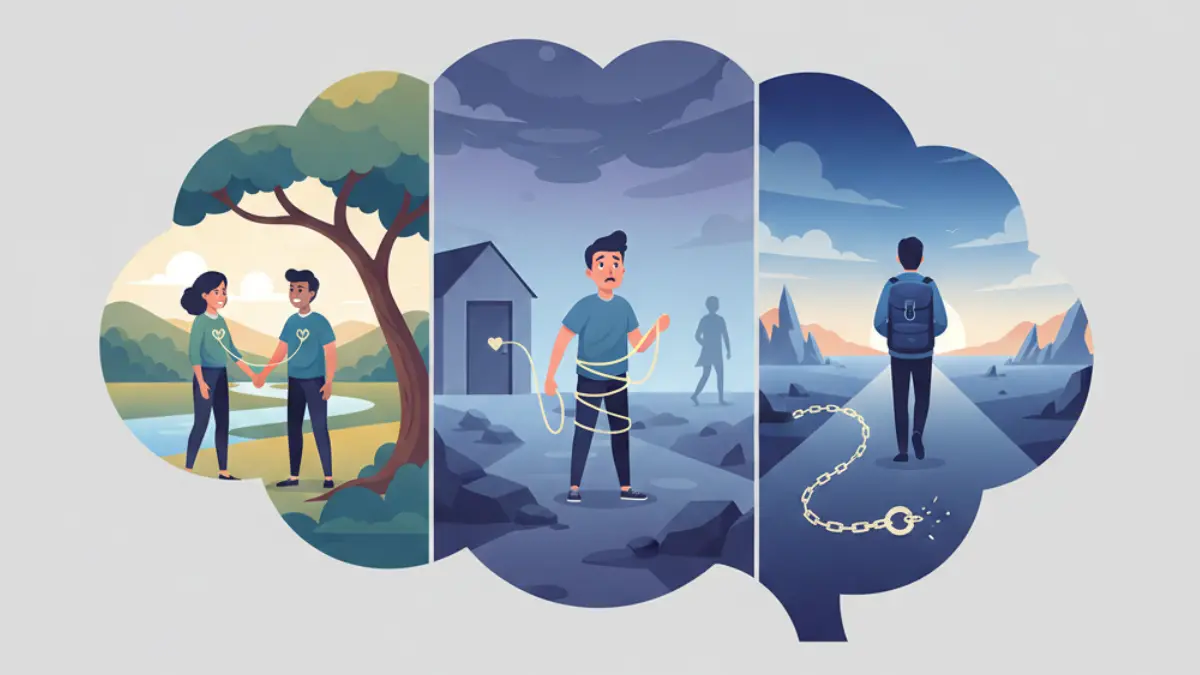
Relationship Anxiety Test: Do You Have an Anxious Attachment Style?
Are you overly preoccupied with your partner's love? Take this test to find out.

Romantic attachment describes the emotional bond you form with your significant other. This bond is rooted in your earliest experiences with caregivers, which shape your patterns for seeking closeness, comfort, and security in adult relationships. An Anxious Attachment Style develops when a person's caregivers were inconsistent or unpredictable, creating a foundation of insecurity that translates into romantic partnerships. It is one of the primary attachment patterns studied in relationship psychology, alongside secure and avoidant styles.
For those with an anxious attachment style, relationships are often colored by a pervasive fear of abandonment and a chronic, high-level need for reassurance from their partner. This can manifest as dependency, heightened emotional reactivity to perceived slights or rejection, and difficulty maintaining trust in their partner's long-term commitment. This preoccupation often leads to behaviors that partners may perceive as clingy or overly demanding, which can place a strain on the relationship. If you're interested in other factors that impact your love life, you can also explore our Fear of Being Single Scale or the Relationship Satisfaction Scale.
Take The Anxious Attachment Scale
References
Inspired by work by Wei, M., Russell, D. W., Mallinckrodt, B., & Vogel, D. (2007). The experiences in close relationship scale (ECR)-short form: Reliability, validity, and factor structure. Journal of Personality Assessment, 88(2), 187–204.
Frequently Asked Questions
How long does this scale take?
It takes a few minutes to complete.
Are my responses private?
Yes, all responses are anonymized and confidential.
Can I take this test more than once?
Yes, you can retake the test any time to see how your results may have changed.
Disclaimer
This scale is designed for entertainment purposes and is not a substitute for professional diagnosis or treatment.
More Articles For You
-
4 Reasons Remote Work Is Your Ideal Fit
Discover why some professionals experience higher autonomy, better mental health, and peak performance when working outside the traditional office.
-
3 Reasons We Replace Daily Intimacy With Big Moments
From date nights to holidays, many couples depend on events for closeness. But real intimacy grows through everyday emotional skill.