2 Clear Signs You've Slipped Into The 'Parent Role' In Your Relationship
If your relationship feels more like caretaking than partnership, these patterns may explain why.

People play many roles in a romantic relationship. They can be a friend, a caregiver, a confidant, an advisor and more. But there's one role people rarely intend to play in relationships and yet many quietly slip into: the "parent" in the relationship.
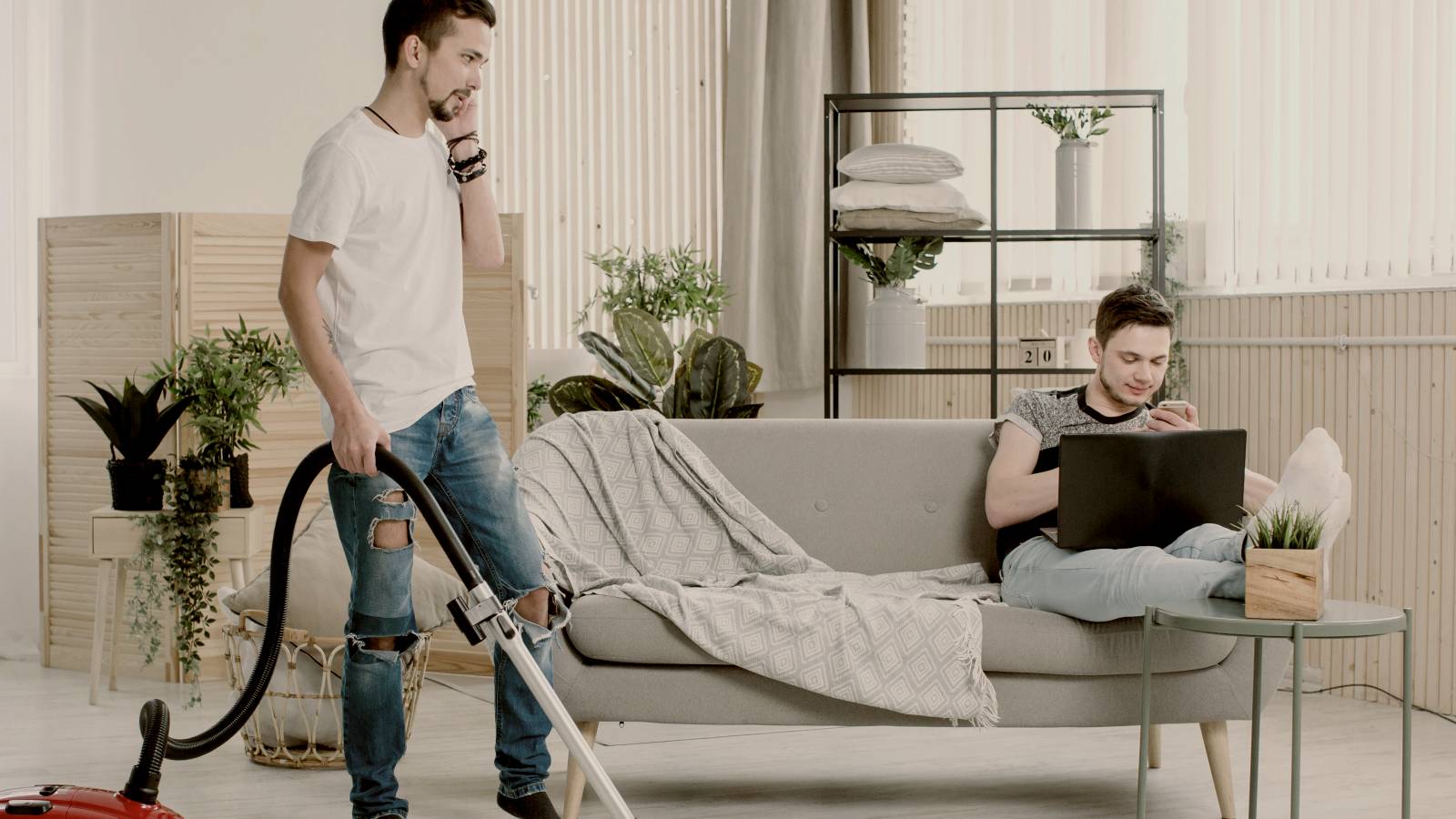
It's a non-flattering dynamic for either partner when one person becomes the responsible adult carrying the emotional, logistical and motivational weight of the relationship, while the other slides into the position of a dependent, passive passenger, or, in some instances, resistant teenager.
What makes this dynamic uniquely exhausting is the gradual pace at which it unfolds. There is no single moment where someone declares, "I'll take over as the unofficial parent here." Instead, people are forced to adopt these behaviors when there is a perceived deficit in structure or stability in the bond.
In romantic relationships, that deficit can come from inconsistency, avoidance or emotional under-functioning. Necessity forces one of the two partners, over time, to step up into assuming the role of a parent.
Here are the two most telling signs you're becoming the parent in the relationship, and why noticing them matters for your bond and your well-being.
1. You're Being The Parent By Managing Everything
Responsibilities need to shift and rebalance in a relationship as circumstances change. However, the dynamic ceases to be a partnership and turns into a hierarchy when one partner is forced to take the role of a household manager and therapist all at once.
A 2024 study involving 322 mothers revealed that even in situations where physical tasks appeared to be more equally divided, women were still the ones to take the larger portion of the cognitive household labor. Most importantly, this "invisible load" was associated with increased levels of stress, depression, burnout and decreased relationship functioning.
The study's findings indicate that the source of the problem is not only what the "parent partner" has to do, but also that they have to create mental space for this role they didn't know they signed up for.
One partner becomes the default de-escalator, the consistent soother or the person who is always able to keep the balance when tensions start to rise. In turn, emotional labor, unfortunately, shifts from co-regulation to being unilateral. What's worse is that this dynamic can become a default rather than a contextual response.
Instead of two adults creating stability together, one partner becomes the one who drives both the practical and emotional function of the relationship, while the other passively benefits from the structure. In fact, often over time, "If I don't handle it, everything will fall apart" becomes the dominant, familiar thought that signals the relational balance has shifted into something more like parenthood than partnership.
2. You're Being The Parent Because You've Stopped Expecting Reciprocity
One of the more telling signs that a parent–child dynamic has taken hold is when the parent-partner has absolutely no expectations from the other. This dynamics often solidifies when one partner consistently under-functions and gradually keeps lowering the bar.
The initiative, emotional presence, thoughtfulness and accountability that were once basic expectations in the relationship now begin to feel like luxuries. The parent-partner, as a result, starts praising the bare minimum the way a parent applauds a child who "finally cleaned their room."
A 2023 paper published in the International Journal Of Cognitive Therapy explains how hopelessness and a perceived lack of control over one's life can push people to withdraw, reduce their attempts to adapt and quietly recalibrate their expectations downward.
Notably, the study found largely weak or inconsistent correlations between helplessness and adjustment across groups which is an indication that this process is not always dramatic or easily measured. In many cases, helplessness manifests as a subtle reduction in effort, motivation or expectation rather than overt dysfunction. This nuance is important because this is exactly how people slowly and imperceptively start resigning in their relationships.
The danger here is burnout for the over-functioning partner, of course, but also stagnation for the under-functioning one. Compliance and familiarity can replace reciprocity and growth. And finally, it may no longer occur to either partner that a relationship should feel like a collaboration between equals.
However, when one sees the small, little ways expectations erode, and how psychological resignation can anchor that erosion, it can empower them to imagine something different and more sustainable for the benefit of both partners.
How Does A Parent-Partner Become An Equal Again?
As relationship dynamics are shaped by both people, they can also be reshaped by both people too. The first step is acknowledging the imbalance without shaming either partner for stepping into a role that felt necessary at the time.
Here are a few evidence-based steps can help redirect the dynamic:
- Name the pattern, not the person. Instead of "I feel like your parent," try saying, "I feel like I'm holding a lot of the logistical and emotional load, and I want to rebalance that together."
- Set boundaries that restore shared responsibility. Boundaries are not punishments; they are guardrails that are meant to protect energy of individuals on both sides of the line.
- Invite participation, do not assign. Adults respond better to collaboration than correction. If the tone is corrective, it might be met with compliance. But if the tone is inviting, it will be met with initiative.
- Allow natural consequences. When the parent-partner steps back, their partner has the room and opportunity to step up and lighten their load.
Being the "parent" in a relationship can be a draining and thankless role. Take the Relationship Satisfaction Scale to know where you relationship stands.
Curious to know who your historical personality twin is, as well as your historical opposite? Take the Historical Figure Quiz for an instant answer.
About the Author
Mark Travers, Ph.D., is the founder of Therapytips.org, where he helps match new clients with the right therapist on the team — request a session or get matched here. Mark received his B.A. in psychology, magna cum laude, from Cornell University and his M.A. and Ph.D. from the University of Colorado Boulder. His academic research has been published in leading psychology journals and featured in major outlets including The New York Times and The New Yorker. He is a regular contributor for Forbes, CNBC, and Psychology Today.
More Articles For You
-
Psychologist: Only This 1 Habit Can Break Your Validation Addiction
Seeking approval can turn into an addiction. Only one habit can protect you from it.
-
Post-Traumatic Stress and how to cure it in one session.
What is the Rewind Technique?