This Psychology-Inspired Quiz Helps You Discover Your 'Mythic Mentor'
Ancient archetypes still shape modern minds. Find out which mythic mentor reflects your psychological strengths and growth style.

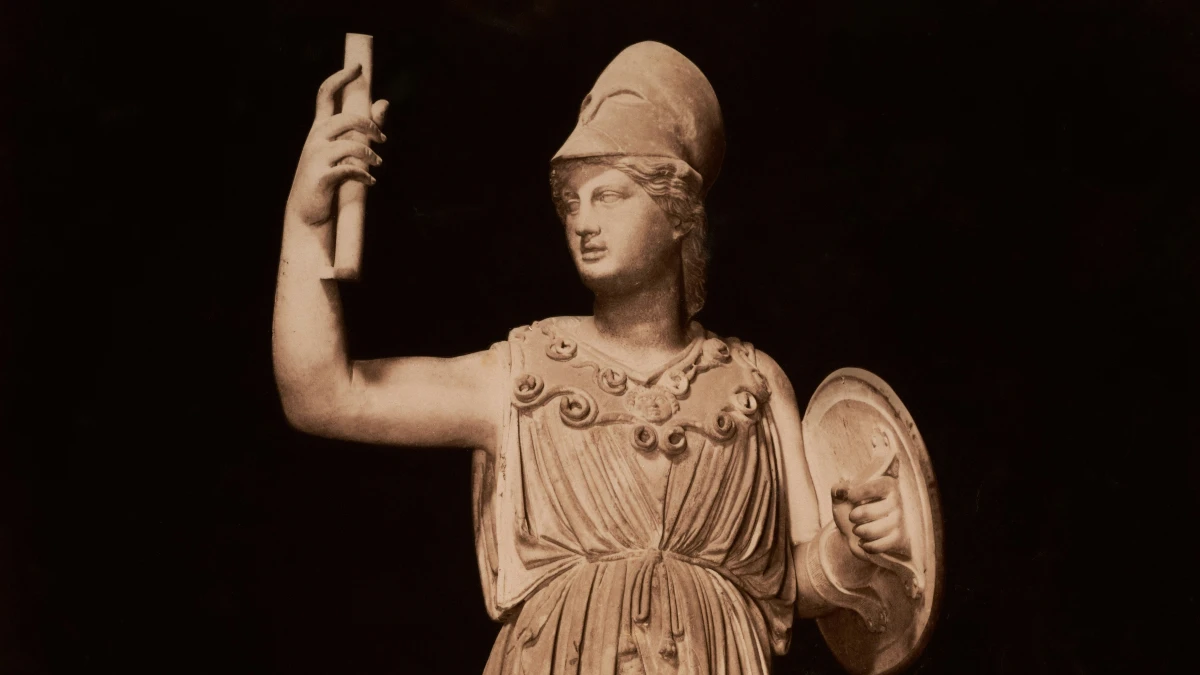
From the strategic wisdom of Athena to the transformative power of the Egyptian god Thoth, ancient mythologies have long served as mirrors for human psychology. These archetypal figures weren't just stories; they can also be considered sophisticated frameworks for understanding personality, motivation and behavior.
Recent research in personality psychology suggests that the archetypes embedded in ancient myths may correspond remarkably well with contemporary models of personality traits and psychological functioning.
If you're curious about which mythological figure best represents your personality structure, I've developed a brief assessment that maps your traits onto five major mythological traditions.
You can take the quiz here to discover whether your psychological profile aligns more with Greek, Roman, Norse, Egyptian or Celtic archetypes — but first, let's explore the fascinating science behind why this connection exists.
The Psychology Of Mythic Archetypes
Carl Jung, the Swiss psychiatrist and psychotherapist, popularized the concept of archetypes in psychology, proposing that certain universal patterns of behavior and symbolism appear across cultures and throughout history. Modern research has validated aspects of Jung's theory while refining our understanding of how these patterns emerge.
Research has found that archetypal themes demonstrate remarkable consistency across diverse cultures, suggesting they tap into fundamental aspects of human psychology rather than culturally-encapsulated constructs.
What makes mythological archetypes particularly valuable for self-understanding is their multidimensional nature. Unlike simple personality labels, mythological figures embody complex combinations of traits, values and behavioral patterns.
For instance, the Norse deity of Thor isn't just "strong." He also represents courage combined with protectiveness, impulsivity tempered by loyalty, and physical prowess integrated with a sense of justice.
Where Does Personality Meet Myth And Story?
Contemporary personality psychology, particularly the Five-Factor Model (often called the Big Five), identifies five broad dimensions of personality: Openness, Conscientiousness, Extraversion, Agreeableness, and Neuroticism. Research consistently shows these traits are relatively stable across the lifespan and predict important life outcomes, from career success to relationship satisfaction.
What's fascinating is how naturally these scientific dimensions map onto mythological archetypes. Consider the Greek goddess Athena. According to popular myths, and even contemporary interpretations, she appears to be high in Conscientiousness (planning), Openness (wisdom and intellectual curiosity) and moderate in Extraversion (socially engaged but thoughtful).
The Norse god Loki — who is still a popular and current figure in our cultural imagination due to Marvel's most recent interpretation of mythological narratives — is often considered to be high in Openness (creativity and unconventionality) but low in Agreeableness and Conscientiousness (mischievous and unpredictable).
Research from the Journal of Analytic Psychology notes that people spontaneously use archetypal narratives to make sense of their own personalities. Individuals who are able to articulate their personality through narrative archetypes might show higher levels of self-understanding and psychological integration, which psychologists call "narrative identity coherence."
How Myths Help Build Our Life Story
Having a coherent, well-articulated sense of identity serves protective psychological functions. It buffers against stress, facilitates better decision-making and promotes resilience.
As a renowned 2013 study from Current Directions in Psychological Science explains, the stories we tell about ourselves, including the archetypal patterns we identify with, literally shape our psychological functioning. People with strong narrative identities show better mental health outcomes and greater life satisfaction.
Mythological archetypes provide a particularly rich vocabulary for this narrative construction. Unlike clinical personality descriptions, which can feel reductive or pathologizing, mythological figures offer heroic, multidimensional templates. You're not "high in neuroticism;" you're like the Celtic Morrigan, whose intensity and emotional depth fuel prophetic insight. This reframing doesn't change the underlying traits, but it does change how we relate to them.
One reason this assessment incorporates five distinct mythological traditions is that personality doesn't express itself identically across cultures. Cross-cultural psychology has revealed that, while the basic structure of personality traits remains consistent globally, their expression and valuation vary significantly.
For instance, traits associated with assertiveness and individual achievement (think Roman archetypes) are more valued and more strongly expressed in individualistic Western cultures, while traits associated with harmony and collective identity (more common in some Egyptian mythological themes) are emphasized in collectivist cultures.
This isn't to say that personality is arbitrary; your underlying traits will remain relatively stable across your lifespan (though personality change is absolutely possible). But understanding which cultural archetypal tradition resonates most with you can reveal how you've learned to express and value different aspects of your personality.
How To Use The 'Mythic Mentor' Quiz Results
Understanding your archetypal personality pattern has various practical applications. For instance, people who work in fields aligned with their personality traits report higher job satisfaction and performance. If your profile aligns with strategic, wisdom-oriented Greek archetypes, you might thrive in research, planning or advisory roles. If you resonate more with action-oriented Norse figures, you might excel in dynamic, high-stakes environments.
Similarly, understanding personality patterns, yours and others', improves communication and compatibility. Recognizing that your partner operates from a different archetypal framework (perhaps more nurturing Egyptian versus more warrior-like Norse) can foster empathy and reduce conflict.
While personality assessments can provide valuable insights, it's important to remember they're tools for self-reflection, not rigid categories. Your personality is more fluid and context-dependent than any archetype can fully capture. Moreover, you likely embody multiple archetypal patterns depending on the situation. Psychologists describe this multifacetedness as "personality variability."
The real value isn't in discovering which single archetype you "are," but in recognizing which archetypal patterns you draw upon, which patterns you might want to develop or which patterns no longer serve you.
We continue to evolve psychologically throughout life, particularly in response to new experiences and conscious self-reflection. Ancient cultures understood this, too: their mythologies are full of transformation stories of gods who must adapt and heroes who must grow.
So, whether you discover your personality aligns with the disciplined wisdom of Egyptian Thoth, the fierce independence of Celtic warriors or the strategic brilliance of Greek Athena, remember that this is simply one lens for understanding the complex, evolving story of who you are.
Take my fun and science-inspired Mythic Mentor Archetype Quiz to know which ancient mythological character aligns with your personality.
About the Author
Mark Travers, Ph.D., is the lead psychologist at Awake Therapy, responsible for new client intake and placement. Mark received his B.A. in psychology, magna cum laude, from Cornell University and his M.A. and Ph.D. from the University of Colorado Boulder. His academic research has been published in leading psychology journals and has been featured in The New York Times and The New Yorker. He is a regular contributor for Forbes, CNBC, and Psychology Today. Click here to schedule an initial consultation with Mark or another member of the Awake Therapy team.
More Articles For You
-
3 Ways To Use Overwhelm Productively
When understood correctly, overwhelm can become a powerful guide for prioritizing what matters most.
-
3 Psychological Reasons Why You Miss People Who Hurt You
Understanding the science behind emotional attachment can help you stop romanticizing what caused pain.