3 Reasons Couples Feel Worse On Valentine's Day
Cultural scripts around romance can distort how couples experience and evaluate their connection.

For many couples, Valentine's Day unintentionally becomes an annual stress test. It has a predictable pattern: a spike in disappointment, resentment and low-grade relational anxiety. People describe feeling unusually sensitive, more critical of their partners or oddly lonely in their relationship. Some report having more arguments that week than usual. Others feel a vague emotional flatness in place of romance.
This is not because most couples are dysfunctional. It's because Valentine's Day, as a cultural event, systematically activates several psychological mechanisms that make relationships feel worse than they actually are.
(Take my fun and science-inspired Romantic Personality Quiz to know if you're a quiet admirer or a flamboyant performer.)
The problem is not love, but rather the context in which love is evaluated. Here are three reasons why this can be so upsetting
1. The Valentine's Comparison Trap
Social comparison theory is perhaps one of the most powerful forces at play underlying this feeling. Humans naturally evaluate themselves by comparing their lives to those of others, especially when objective standards are unclear.
The problem is that love is not measurable or objectively quantifiable. There is no fixed relative standard of comparison for how much two partners love each other. Owing to individual differences, there is varying understanding of "good love" in romantic relationships. And because it's a moving goal post, people tend to default to the easiest available reference point of comparing themselves to other seemingly settled couples on Valentine's Day.
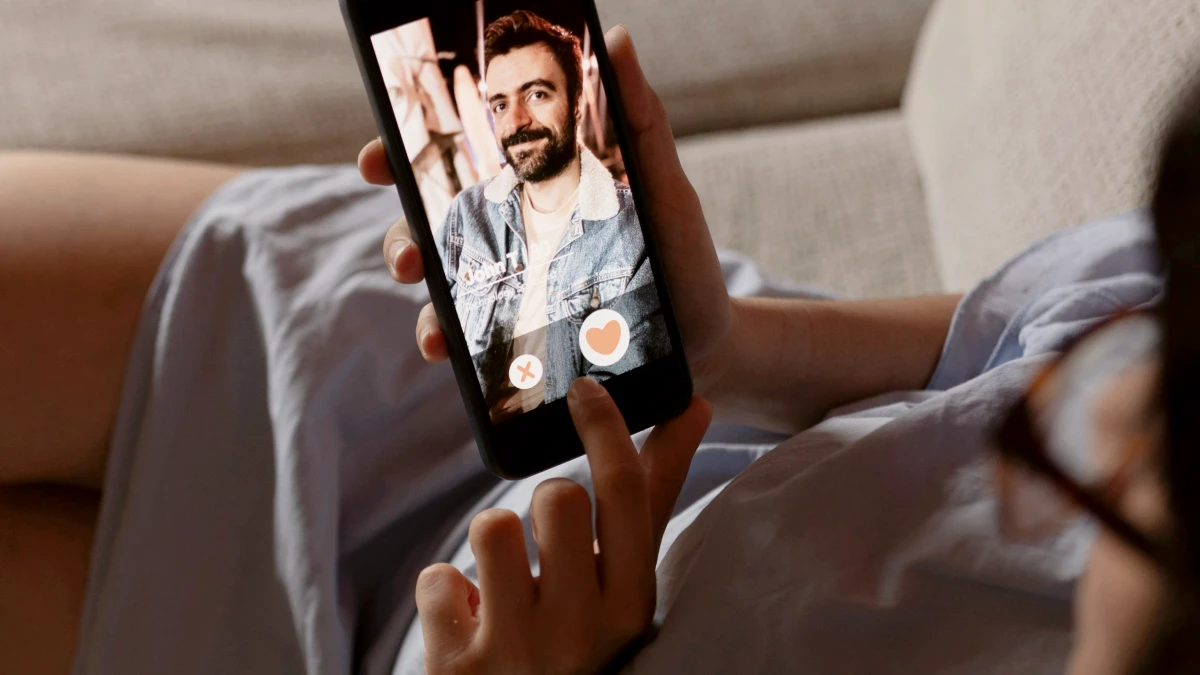
It gets worse when the source of this information is social media. Seeing idealized relationship posts brings about more dissatisfaction and feelings of inadequacy, even in otherwise secure partnerships. When you look at the carefully chosen pictures of surprise trips, love notes, romantic dinners and perfectly posed affection, you stop assessing your own relationship in its internal reality but rather comparing it to a highlight reel.
This is because social media use affects self-esteem and feelings of belonging largely through social comparison. It is not mere exposure to content that shapes how people feel about themselves, but the act of comparing their own lives to what they see online that does the psychological work.
The more people engage with social platforms, the more frequently they evaluate themselves against others, and these comparisons, in turn, predict shifts in mood, self-worth and social confidence.
In fairness, these Valentine's posts aren't always "fake." The problem often is that they are context-free. You see the outcomes of one's effort without the process, you see gestures without negotiations, conflict, fatigue, logistics or history. The brain, however, does not adjust for missing data and simply jumps to the conclusion that other people are doing love better than you are.
Such upward comparison reliably lowers mood and self-esteem. And because relationships are identity-relevant, the emotional impact cuts deeper than comparisons about other aspects of your life such as careers or fitness.
2. The Valentine's Performance Problem
Sociologically, Valentine's Day functions as a normative ritual about how love should be expressed. There are expected behaviors (gifts, plans, declarations, etc.), expected emotional states (gratitude, romance, excitement, etc.) and an implicit grading system.
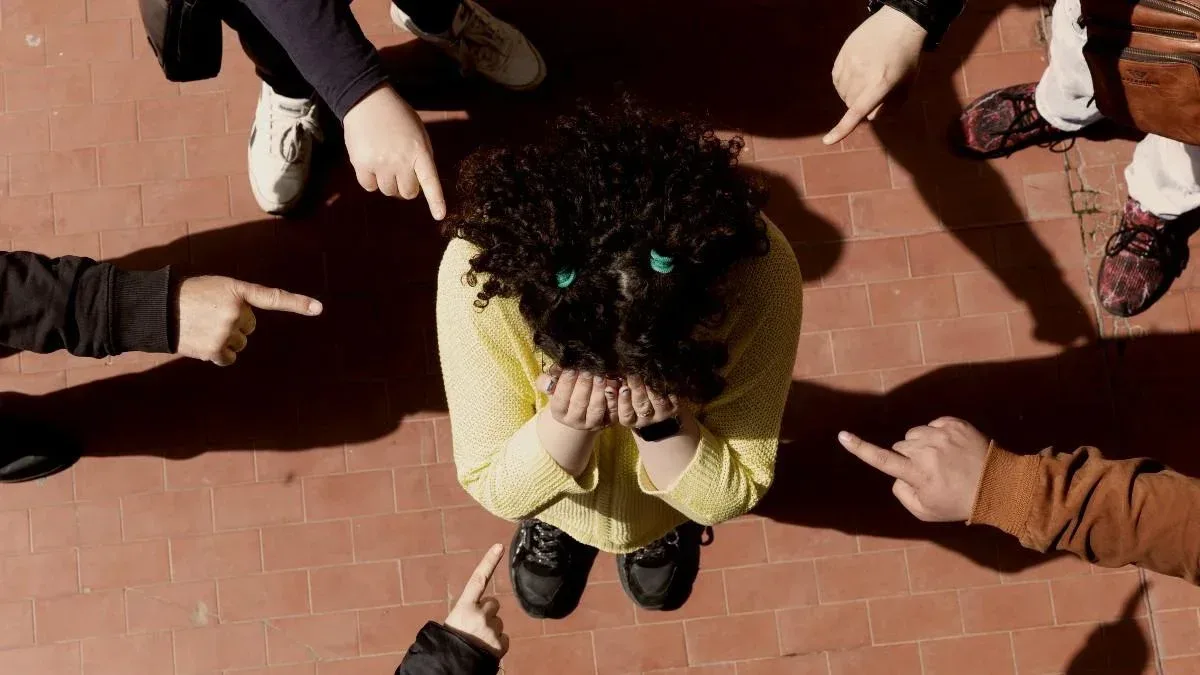
When love becomes something you must demonstrate on cue, it stops being a private emotional experience and becomes a public assessment. This creates evaluation anxiety, the same phenomenon that makes people perform worse in exams or first dates.
Instead of feeling connected, partners start monitoring:
- "Did I do enough?"
- "Did they do enough?"
- "Was it thoughtful enough?"
- "Does this mean something about us?"
The relationship is no longer being lived or celebrated on Valentine's day; it's being audited.
What's ironic, however, is that felt security, responsiveness and everyday emotional availability are the factors that predict long-term happiness, not big or symbolic gestures. Even specific behaviors we typically associate with romance, such as affectionate touch, appear to emerge organically from this emotional infrastructure.
A 2021 study from Personality and Social Psychology Bulletin suggests that people are more likely to express physical affection when they perceive their partner as responsive in daily life, and that this affectionate touch, in turn, reinforces feelings of being emotionally understood the next day. Closeness is something that co-evolves from responsiveness over time.
But Valentine's Day foregrounds the opposite logic: it invites couples to evaluate their relationships based on how love is displayed, rather than how it is actually experienced. And in doing so, it replaces intimacy with performance, and emotional presence with emotional proof.
3. The Valentine's Expectation Gap
There is an expectation-disconfirmation model in psychology which suggests that happiness depends less on what happens and more on how reality compares to what you expected. When experiences exceed expectations, people feel satisfied. When they fall short, disappointment follows, even if the experience itself was objectively positive.
Romantic relationships are especially vulnerable to this dynamic because there is no stable metric for how romance should feel, how much effort is enough or what level of emotional intensity is appropriate. Instead, people rely on mental templates shaped by culture, media and personal fantasy.
Valentine's Day dramatically inflates these ideals. But most real relationships operate on a much quieter emotional bandwidth. They are built around familiarity, routine, shared logistics and emotional steadiness, rather than cinematic intensity. This makes even objectively decent experiences feel disappointing on Valentine's day. A nice dinner feels underwhelming, a thoughtful gift feels slightly off and a calm, pleasant evening feels oddly flat. Only because the reference point has been temporarily raised beyond what everyday intimacy is designed to meet.
A 2021 study from Frontiers in Psychology found that people's evaluations of whether their partner meets their ideals fluctuate from day to day based on recent experiences. On days marked by positive interactions, partners are perceived as closer to ideal; on days marked by negative or emotionally muted experiences, partners are judged as falling short, even though the relationship itself may not have changed at all.
This explains why perceptions of relational quality are highly context-dependent and expectation-sensitive. This expectation gap creates a gulf between how love is imagined and how it actually feels in embodied, long-term relationships. And the brain tends to interpret this gap as a failure of the relationship, rather than as a mismatch between fantasy and psychological reality.
It is this temporary rewiring of the standard against which love is being evaluated that leads to disappointment.
What Actually Strengthens Relationships (On Valentine's Day And Otherwise)
Here is a list of predictors of relational satisfaction:
- Feeling emotionally understood
- Having small, frequent bids for connection
- Managing conflict with repair, not avoidance
- Experiencing psychological safety
- Sharing meaning through ordinary rituals
None of these experiences peak on February 14th. They accumulate in the everyday moments because they are slow, repetitive, unglamorous and neurologically powerful. But the caveat is that they may not photograph well. In other words, they may not "feel" or "look" romantic enough.
So, the goal is not to reject romance on Valentine's day entirely; it's to de-centre performance. Valentine's Day can also be very healthy and fun, if you could focus on:
- A symbolic gesture, not a diagnostic test
- An invitation, not an evaluation
- A moment of reflection, not a referendum on the relationship
One helpful question to ask would be, "How do we usually show care to each other?" instead of, "Did we do enough?"
Additionally, try to intentionally downscale the pomp and circumstance surrounding the day, focusing instead on shared rituals that create shared meaning in the relationship. Because, ultimately, relationships suffer from being constantly measured against fantasies that were never designed for real human nervous systems.
Is Valentine's Day making your relationship feel worse? Take the Relationship Satisfaction Scale to assess if your love is based on a fictional template.
Take this Movie Character Energy Quiz to see what may be enabling you to set very unrealistic standards for the human heart on Valentine's Day.
About the Author
Mark Travers, Ph.D., is the lead psychologist at Awake Therapy, responsible for new client intake and placement. Mark received his B.A. in psychology, magna cum laude, from Cornell University and his M.A. and Ph.D. from the University of Colorado Boulder. His academic research has been published in leading psychology journals and has been featured in The New York Times and The New Yorker. He is a regular contributor for Forbes, CNBC, and Psychology Today. Click here to schedule an initial consultation with Mark or another member of the Awake Therapy team.
More Articles For You
-
University Of Liverpool Research Reveals What Really Motivates Young Adults On Tinder
Researcher Pantxika Morlat reveals why Tinder doesn’t harm self-esteem as much as we think.
-
3 Steps To Overcome Your Fear Of Being Judged
Learn practical ways to manage judgment anxiety and regain confidence in your daily life.