
This therapist's perspective reveals insights into psychological growth and well-being.
1 Marriage-Saving Rule To Remember Every Day
The easy-to-remember ‘traffic light rule’ could be the daily check-in your marriage needs.

By Mark Travers, Ph.D. | Last Updated:
Sweeping philosophies hardly make the cut these days when it comes to the reality of long-lasting marriages. This is because marriages are sustained on the basis of small, repeatable habits that help couples make decisions, resolve conflicts and have a deep sense of regard and respect for each other over decades.
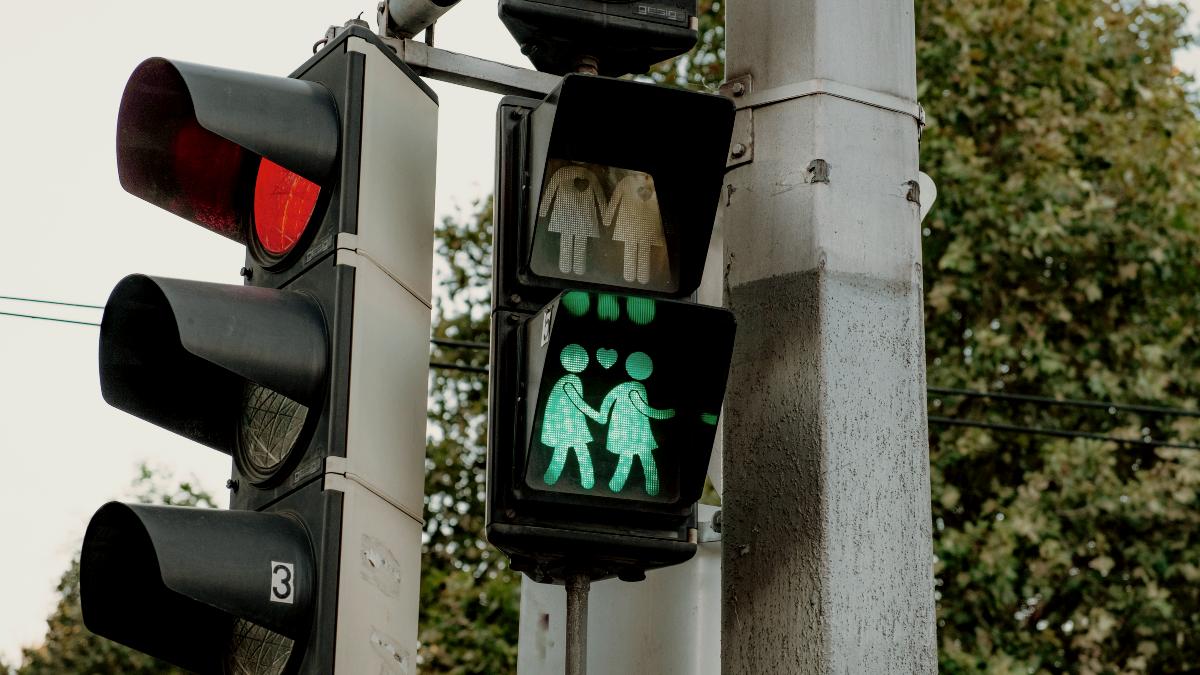
One such habit, particularly when it comes to decision-making in marriage, can be summed up as the “Traffic Light Rule.” Inspired by the familiar red, yellow and green signals that guide drivers on the road, this framework can help couples navigate the daily choices and turning points that shape their relationship. The rule ensures that both partners feel heard, valued and respected in the moments that matter most.
The process that couples choose to make decisions is equally as important as the decisions themselves. The ways you handle disagreements, even small ones, predict whether your relationship will flourish or fracture. You will notice that collaborative decision-making strengthens bonds, while rushed or one-sided choices breed resentment.
This speaks to the process of decision-making that communicates respect (or lack thereof), equality (or imbalance) and trust (or the erosion of it).
The Traffic Light Rule is a structured way to protect that sacred process without falling into common traps. In a crux:
Green lights help identify moments of genuine alignment, ensuring both partners step forward with confidence.
Yellow lights create a built-in pause, preventing impulsive moves and inviting deeper reflection.
Red lights safeguard boundaries, ensuring no partner feels overridden.
Here is a detailed breakdown of how it works:
The Green Light Indicates Moving Forward With Shared Enthusiasm
A green light means a clear go-ahead. In marriage, this manifests in situations where both partners are clearly aligned. They want the same thing, feel good about it and are ready to act.
Ample studies on commitment highlight that shared enthusiasm amplifies follow-through. When both people enter into a decision wholeheartedly, they’re more likely to support each other during challenges that arise later. This is also known as the principle of “joint commitment,” where once both partners agree, they feel a collective responsibility for the outcome, which lowers the risk of finger-pointing and regret later on.
Think of the time when, maybe, you felt excited about adopting a dog. You talked through the logistics, acknowledged the responsibilities and you both felt ready. On the surface, it may have appeared to be a simple green-light decision with shared enthusiasm and momentum to move forward. But research on joint commitment throws light on a deeper mechanism at play.
Each partner’s yes doesn’t just mark a decision in the present, it adds layers of accountability when stacked onto a history of prior joint actions, creating a stronger sense of mutual obligation. This makes it harder to disengage and easier to stay coordinated, even when challenges arise.
In other words, their shared “yes” becomes a durable “we-choice.” Training, late-night walks and vet bills stop being “your job” or “my burden” and instead feel like responsibilities carried together, reinforcing the couple’s identity as a team.
The Yellow Light Asks To Pause And Reflect
Yellow often creates an unwarranted confusion on the road. Many drivers just want to speed through it so that they don’t get stopped by the imminent red light. Couples, too, often make the same mistake of rushing through hesitation when a yellow light is a crucial signal to slow down, pay attention and reflect.
A 2011 study published in the Journal of Experimental Social Psychology demonstrated that people who make pressured decisions later feel less ownership over them, leading to dissatisfaction. When one partner regrets a rushed joint decision, that dissatisfaction can get easily projected onto the person in the form of: “You pushed me into this,” or “We didn’t think this through.”
Clearly, yellow lights arise when one partner is uncertain or ambivalent. But know that this is not a rejection. It is a request for space and dialogue.
For example, consider when one partner suggests something as big as relocating to another city for a new job. The other may be unsure, though not opposed, but anxious about leaving family and community. This is a yellow light. Instead of pressing for an immediate yes or no, the couple must agree to revisit the discussion weekly, giving space to gather information, process emotions and weigh in the pros and cons.
Yellow lights, then, are opportunities. They push couples to ask deeper questions and find meaning behind one’s actions. Couples who respect yellow lights tend to build trust, because hesitation is treated as valuable input, not as a nuisance.
The Red Light Means A Clear No
A red light is non-negotiable. It means stop. In marriage, a red light appears when one partner gives a clear no. Respecting that no, especially when a decision concerns both of you, is not just about avoiding conflict in the moment, it is about protecting the partner’s sense of autonomy and, in turn, the foundation of trust between the two of you.
Research on autonomy in close relationships shows that when people feel pressured to act against their will, trust and intimacy decline, naturally. A 2019 study on need fulfillment adds that closeness in a relationship is healthiest when it coexists with autonomy.
In fact, people are more willing to respond constructively to their partner when they feel both connected and self-directed. In other words, boundaries are nothing to be afraid of; they’re simply guardrails that keep both partners safe in a relationship.
Take the example of one partner wanting to invest in a friend’s startup while the other feels strongly against taking the financial risk. That no is a red light. Respecting it communicates that both voices matter and that decisions cannot move forward without mutual consent. Ignoring it, by contrast, risks financial fallout, sure, but also resentment and a gradual erosion of identity within the marriage.
Red lights, then, remind couples that saying no is just as vital as saying yes. When both partners can trust that their boundaries will be respected, they maintain a sense of self while remaining deeply connected, which makes for an essential balance for long-lasting love.
Why The Traffic Light Rule Works
Taken together, the three lights provide a framework that is both simple and profound. Why does it work so well? Three psychological mechanisms explain its power:
It protects equality. By requiring both partners’ input, the rule prevents one person from dominating decision-making. Perceived fairness is one of the strongest predictors of relationship satisfaction.
It builds trust through predictability. When both parties know the “rules of the road,” they can engage in decision-making without fear. Trust grows not just from big promises but from consistent, predictable respect in small choices.
It reduces decision fatigue. Decision-making can be cognitively draining. Having a shared rule of thumb simplifies the process, lowering stress while ensuring important values are not overlooked.
Practical Ways To Apply The Rule
Knowing the framework is one thing, and living it out is another. Here are a few quick strategies for applying the “Traffic Light Rule” in everyday marriage:
Name the light. Use the language directly: “This feels green for me,” or “I’m at yellow.” Naming the light makes invisible emotions visible.
Schedule decision check-ins. Just as businesses have regular strategy meetings, couples benefit from weekly or monthly check-ins to revisit ongoing decisions.
Respect silence. If one partner hesitates, resist the urge to fill the space with persuasion. Silence allows for reflection and empathy.
Break big decisions into smaller steps. Sometimes what feels like a red is really a yellow caused by overwhelm. Splitting a decision (e.g., first discussing budget, then timing when discussing a future purchase) makes it more manageable.
Remember the long game. Not every choice needs to be made today. The healthiest marriages are those that respect pacing as much as outcome.
It’s important to not lose sight of the fact that couples who last are not necessarily those who never argue or always agree. They are the ones who learn how to navigate differences with respect, patience and care. And the “Traffic Light Rule” offers a straightforward way to do just that.
Are you happy with the way you and your partner make decisions in your relationship? Take this science-backed test to see where you stand with them: Relationship Satisfaction Scale
A similar version of this article can also be found on Forbes.com, here.